
Last updated November 2, 2026
 Wrought iron
 Wood & steel frame
 Farm & ranch
 Sliding driveway gates
 LiftMaster operators
Free on-site gate assessment - hinges, posts, and your LiftMaster or Nice gate operator checked before anything is quoted
The assessment is free and the quote is the invoice.
Get your free estimateDIY vs Professional Gate Repair: The Bay Terraces Homeowner’s Decision Guide
Most Bay Terraces homeowners don’t realize that California law treats a gate operator as a safety device first and a convenience second. When you adjust the force setting on your LiftMaster operator to compensate for a stiff wheel, you’ve just modified a safety parameter that technically resets your UL 325 compliance obligation. That’s not a hypothetical legal footnote. It’s the actual boundary line between a sensible Saturday project and a liability you didn’t know you were taking on. This guide maps exactly where that line sits for the specific gate systems common in Bay Terraces, what tools and parts you can actually source here, and which repairs are genuinely safe to attempt yourself.
Quick Answer
DIY gate repair in Bay Terraces is appropriate for mechanical tasks like wheel replacement, hinge lubrication, and track cleaning on manual gates. It is not appropriate for anything involving the operator, control board, wiring, or entrapment protection on automated gates, because those components carry UL 325 compliance requirements and California liability that transfer to whoever performs the work. If your gate has a motor, call a professional. If it doesn’t, most mechanical fixes are within reach of a careful homeowner.
Styles & brands we work with
- Wrought iron
- Wood & steel frame
- Farm & ranch
- Sliding driveway gates
- LiftMaster operators
Table of Contents
- The Task-by-Task Matrix: What’s Actually DIY in Bay Terraces
- UL 325 and the Compliance Reset Problem
- Parts Sourcing Reality: What Bay Terraces Homeowners Can and Can’t Buy
- The Hidden Cost of DIY Errors: Warranty and Component Damage
- The Hybrid Approach: Preparing Work to Reduce Technician Time
- Brand-Specific Failure Patterns We See in Bay Terraces
- DIY vs Professional Cost Comparison
- Common Mistakes to Avoid
- When to Call a Professional
- Frequently Asked Questions
The Task-by-Task Matrix: What’s Actually DIY in Bay Terraces
The decision to repair your own gate in Bay Terraces should start with one question: does this task involve electricity or entrapment protection? If the answer is yes, the legal and safety equation changes immediately. Here’s the honest breakdown based on what we see across Bay Terraces homes, from the slope-side properties near Paradise Hills to the flat inland lots, where soil moisture and coastal salt air both play roles in how gate hardware wears.
Mechanical tasks on a manually operated gate are genuinely homeowner-appropriate. These include replacing worn caster wheels, lubricating hinge pins, tightening loose bolts on the gate frame, cleaning debris from a slide track, and adjusting a mechanical gate latch. None of these touch the operator, none of them change how the gate interacts with a safety sensor, and none of them create a compliance obligation. A homeowner who can operate a socket set and a dead-blow hammer can handle these in an afternoon. Parts are available at local hardware stores in the Bay Terraces area or through online retailers.
Mechanical tasks on an automated gate get trickier. Replacing a wheel on an electric slide gate is still a mechanical job, but here’s the trap: the new wheel changes rolling resistance. Your operator’s force setting was calibrated for the old wheel’s friction profile. Change the wheel, and the force setting is now wrong. If you then adjust that force setting yourself on a LiftMaster or FAAC operator, you have altered a safety-critical parameter. UL 325 requires a proper entrapment test after any force adjustment. Without that documented test, you are personally carrying the liability if the gate closes on someone. This is why we tell Bay Terraces homeowners this specific piece of advice constantly: change the wheel yourself if you want, but leave the operator alone.
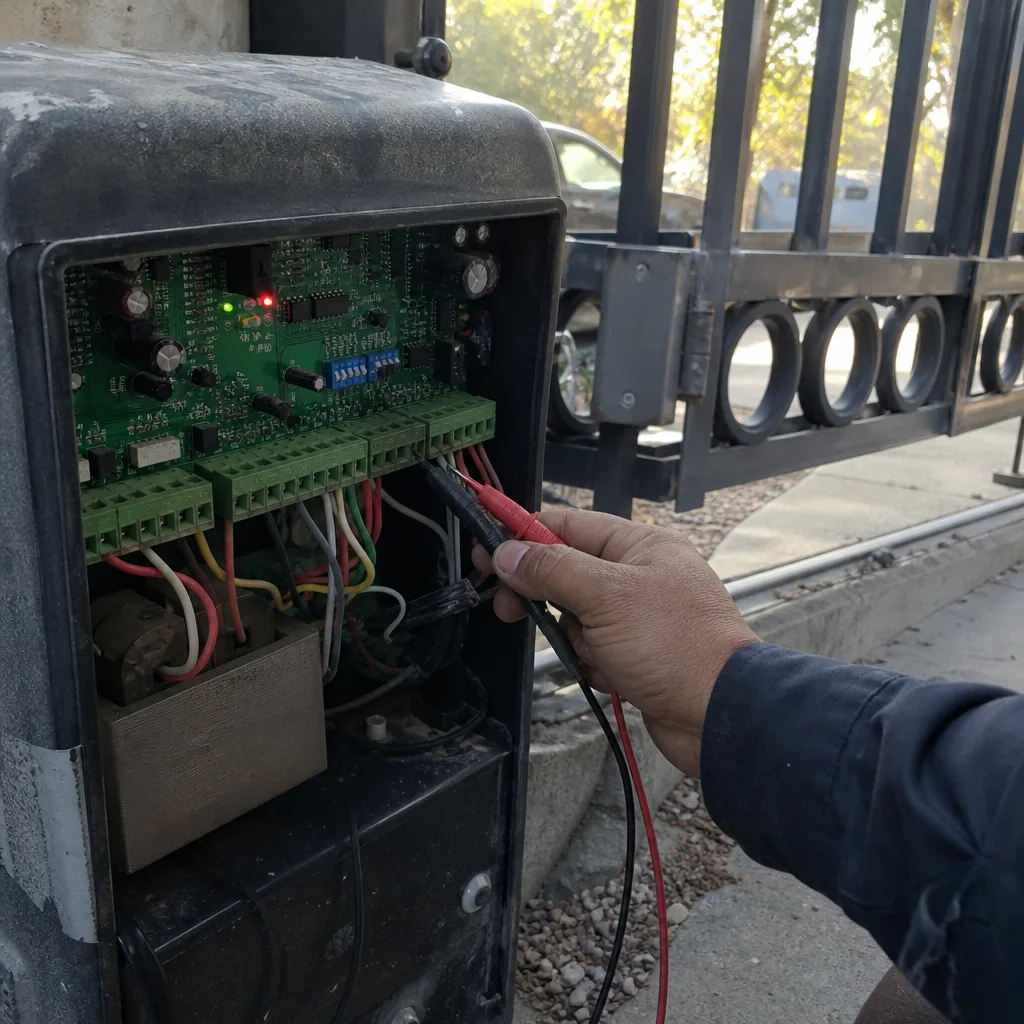
Electrical work is never homeowner-appropriate on a gate system. This means replacing or rewiring the control board, swapping a capacitor, running new low-voltage wire, replacing a keypad that connects to the operator, or installing a new photo-eye sensor. These tasks can be done by someone who isn’t an electrician, but they should be done by someone who understands gate operators specifically. The reason isn’t gatekeeping. It’s that gate operators combine line voltage, low-voltage control logic, and moving machinery in a way that general electrical knowledge doesn’t cover. A simple miswire on a BFT control board can burn out a transformer or leave the gate operating without its safety reverse function.
The Full Task Boundary List
- Homeowner-appropriate, manual gate: wheel replacement, hinge repair, latch adjustment, track cleaning, debris removal, post tightening
- Homeowner-appropriate, automated gate (mechanical only): wheel replacement without force adjustment, manual release function testing, track cleaning, visual inspection of wiring for obvious rodent damage
- Professional required: any operator adjustment, control board work, wiring, photo-eye alignment, keypad programming, loop detector installation, transformer replacement, capacitor replacement, limit switch adjustment, any repair that requires the gate to be re-tested for entrapment compliance
- Professional strongly recommended: hinge replacement on heavy steel gates, spring replacement on cantilever gates, gate frame welding, post resetting, operator mounting plate replacement
The hinge replacement note matters more in Bay Terraces than in inland San Diego communities. Coastal moisture accelerates hinge wear on steel gates, and a sagging gate puts uneven load on the operator motor. By the time a homeowner notices the gate dragging, the hinge may have ovalized its bolt holes, which is a repair that requires the gate to be unweighted safely. That’s not a ladder-and-wrench situation.
UL 325 and the Compliance Reset Problem
UL 325 is the standard that governs automatic gate operators in the United States. It was updated most significantly in 2016 after a series of entrapment fatalities involving older gate systems. The standard requires gate operators to have entrapment protection: either non-contact sensors like photo-eyes or contact sensors like an edge that reverses the gate when it meets resistance. It also requires the operator to be tested after installation and after any significant repair to verify the entrapment protection is working.
Here is the piece that most DIY articles skip: when you work on an automated gate system, the legal responsibility for compliance sits with you. Not the manufacturer. Not the previous owner. Not even the landlord. In California, whoever performs the repair or adjustment is responsible for what comes after. If you adjust the force setting on your Linear operator and a child gets trapped by the gate, the question an attorney asks isn’t whether you meant well. It’s whether you performed a compliant entrapment test after your adjustment. If you did not, and you cannot document that you did, you are exposed.
What triggers a compliance reset obligation? The clearest triggers are: any change to the operator’s force or speed settings, any replacement of the operator itself, any change to the type or position of entrapment protection devices, and any repair that affects how the gate moves. What does not trigger a reset? Replacing a wheel without touching operator settings. Lubricating hinges. Clearing track debris. This is the boundary line, and it’s a bright one.
There’s a practical consequence in Bay Terraces too. Some neighborhoods here have older gate systems installed before the 2016 UL 325 update. Those operators may lack photo-eyes entirely, which is a code problem for the property owner. A professional gate repair service in Bay Terraces will flag that during any service visit. A homeowner who repairs only what breaks may never know the gate is operating below current safety standards until something goes wrong.
Parts Sourcing Reality: What Bay Terraces Homeowners Can and Can’t Buy
The gate parts market is split into two channels: retail and professional. Retail parts are what you can buy from Home Depot, Lowe’s, Amazon, or a specialty online retailer. Professional parts come through distribution channels that require a dealer account or direct manufacturer relationship. The split matters because it determines whether your DIY repair is even possible.
What Bay Terraces homeowners can buy retail: gate wheels with standard bolt patterns, hinges in common sizes, pull handles, latch assemblies, keypad entry systems that operate standalone, keyed gate locks, magnetic locks, and some basic operator remote controls. These are commodity parts. A wheel is a wheel. A latch is a latch. If your manual gate needs these, you can be at a local hardware store and back in your driveway the same afternoon.
What you generally cannot buy without a dealer account: control boards specific to LiftMaster, FAAC, BFT, or Viking operators. OEM remote receivers. Proprietary capacitors. Brand-specific limit switch assemblies. Photo-eye kits matched to a particular operator model. These parts simply are not available through consumer-facing retail channels. When a Bay Terraces homeowner calls us for a control board replacement on a FAAC 400 operator, the part comes through a professional channel. A DIY repair on that board isn’t just risking a mistake; it’s often impossible because the part can’t be sourced at retail.
There is a gray zone: used parts and aftermarket clones on eBay and Amazon. We’ve seen Bay Terraces homeowners buy a used LiftMaster control board online, install it, and then call us when the board arrived with a previous owner’s settings still locked in and no way to reset them without dealer-level access. The money saved on the used board was spent again on a new board plus the labor to undo the mess. Source new OEM parts through a professional, or don’t replace electronic components at all.
The Hidden Cost of DIY Errors: Warranty and Component Damage
Most gate operator manufacturers include language in their warranty that voids coverage if the unit has been modified, improperly installed, or serviced by unqualified personnel. That’s not just legal boilerplate. It’s enforced. When a Bay Terraces homeowner opens the cover on a BFT control board and starts swapping wires based on a YouTube video, and the board fries, the manufacturer warranty does not apply. That $400 board is now a $400 lesson.
We see this most often with control board replacements. The homeowner identifies that the board is dead, orders a new one retail (or a used one), wires it in, and the gate still doesn’t work or behaves erratically. By the time we arrive, the new board may also be damaged because the original failure was a wiring short that would have been caught by a diagnostic process. The homeowner now pays for our diagnostic labor, a new board, and the correction of whatever killed the first board. The DIY attempt didn’t save $150 in labor. It added $300 to the final bill.
There’s a subtler risk on the mechanical side too. Over-tightening a hinge bolt on a steel gate can strip the threads inside a galvanized post, which then requires drilling and re-tapping or a helicoil insert. Using the wrong wheel diameter on a slide gate can change the gate height at the catch post, causing the gate to miss the latch. These are not catastrophic failures, but they turn a $20 part into a $200 repair because the underlying geometry got altered.
The Hybrid Approach: Preparing Work to Reduce Technician Time
For Bay Terraces homeowners who want middle ground between full DIY and full professional service, there’s a hybrid path that legitimately reduces your bill. These are preparation tasks that any homeowner can do before a technician arrives, and they cut billable diagnostic and labor time without touching anything safety-critical.
- Document the symptoms precisely. Write down exactly what the gate does: which direction it fails, whether it happens at the same time of day, any clicking or grinding sounds, what happens when you press the remote versus the keypad. This sounds obvious, but precise symptom reporting cuts diagnostic time in half.
- Clear the gate path and track. Remove debris, rocks, weeds, or anything piled against the track or hinge area. A clean inspection environment means the technician doesn’t spend ten minutes clearing brush before starting.
- Locate your operator model number. The model plate is usually on the side of the operator housing or under the cover. Write it down and have it ready. Brand-specific diagnostics rely on knowing the exact model, not just the manufacturer.
- Test the manual release. If your gate has a manual release mechanism, operate it once so you can describe whether it works. Don’t force it. Just confirm whether the key or lever turns freely.
- Check the obvious before you call. Is the operator plugged in or the breaker tripped? Is the remote battery dead? Is the photo-eye lens clean? These are the three most common no-fix service calls we handle in Bay Terraces.
The hybrid approach doesn’t reduce the technical work, but it does reduce the time a technician spends on discovery. In a service model where you pay for labor by the hour, that’s real money. It’s also genuinely helpful. A homeowner who hands us a written symptom list and a model number has already made the call more efficient than a homeowner who says “it’s just doing something weird.”
Brand-Specific Failure Patterns We See in Bay Terraces
Different gate operators fail differently. That’s not marketing language. It’s diagnostic reality. We service nine gate and operator brands including LiftMaster, FAAC, BFT, and Linear, and each one has quirks that a generalist won’t know and a homeowner almost certainly won’t find in a generic repair video.
LiftMaster operators are the most common residential units in Bay Terraces, and their most characteristic failure is capacitor degradation. Over three to five years, the start capacitor loses capacity, and the gate begins to move slower than it should or hesitates on startup. Homeowners frequently interpret this as a dying battery in the remote and replace remotes before realizing the operator itself is the problem. The fix is a capacitor replacement, not a remote swap, and it’s a five-minute job for someone who knows the operator.
FAAC hydraulic operators show up more often on the larger, heavier gates common on Bay Terraces hillside properties. These are durable units, but they need hydraulic fluid level monitoring that most homeowners never think about until the gate starts drifting or opening only partially. Low fluid causes jerky movement that puts stress on the gate hinge hardware. By the time we see these, the fluid has often been low for months and the hinges have paid the price.
BFT units have a characteristic issue with their limit switch assemblies, especially on slide gates exposed to the dust and grit that Bay Terraces sees during dry spells. The limit switch tells the gate where the fully open and fully closed positions are. When it gets dirty or misaligned, the gate stops short or over-travels and binds. Cleaning and recalibrating a limit switch is a professional job because it requires the operator to be powered and the gate to be moved through its full travel while settings are adjusted.
Linear operators are workhorses, but their control board connectors are vulnerable to moisture intrusion in coastal air conditions like Bay Terraces. A corroded connector can cause intermittent operation that looks like a signal problem. A DIY diagnosis might chase the remote receiver instead of opening the housing and finding green corrosion on the board connections. That specific corrosion pattern is something we see repeatedly on Linear units in this part of San Diego.
This is where electric gate repair in Bay Terraces diverges from generic gate repair. Knowing the failure pattern for the specific brand gets to a correct diagnosis faster, and correct diagnosis is the entire game. A homeowner can replace parts all weekend. If the diagnosis is wrong, the gate will still fail, and those parts were wasted money.
DIY vs Professional Cost Comparison
Let’s put numbers on this so the decision is concrete. These figures reflect what we see in the Bay Terraces market, where labor rates for gate specialists run somewhat higher than general handyman rates because the work requires specialized knowledge and carries compliance responsibility.
For a straightforward manual gate wheel replacement, a homeowner can buy a wheel for $15 to $40 and finish the job in an hour with basic tools. A professional service call for the same job would run $120 to $250, including the part and the service call charge. That’s a clear DIY win, assuming the homeowner has a socket set and the wheel bracket isn’t rusted solid.
For a control board replacement on an automated gate, the math reverses. A used board from an online marketplace might be $100 to $200, but warranty coverage is absent and settings are unknown. A new OEM board through professional channels runs $200 to $500 depending on brand and model, plus two to three hours of labor at $85 to $125 per hour. Total professional cost: roughly $450 to $850. The DIY attempt on this job can easily lead to a second professional visit anyway, making the final cost higher than if the professional had been called first. Add that a miswired board voids the part warranty, and the DIY option carries all the risk with none of the savings.
For a full operator replacement, which some homeowners mistakenly believe is a bolt-on job, the professional cost typically runs $1,200 to $2,800 depending on the operator class and whether new photo-eyes or a new keypad are required. A DIY operator replacement from a big-box store will cost less for materials, but the unit won’t match the brand-specific mounting plate, the wiring may not align, and the entrapment test will not exist. For a Bay Terraces homeowner, this is the worst DIY value proposition in the gate repair category.
| Repair Task | DIY Materials Cost | Professional Total Cost | DIY Reasonable? |
|---|---|---|---|
| Manual gate wheel replacement | $15-$40 | $120-$250 | Yes |
| Hinge lubrication and bolt tightening | $10-$25 | $100-$200 | Yes |
| Track cleaning and debris removal | $0-$20 | $100-$180 | Yes |
| Control board replacement | $100-$200 (used, no warranty) | $450-$850 | No |
| Operator replacement | $300-$800 (big-box unit) | $1,200-$2,800 | No |
| Photo-eye installation and alignment | $50-$150 (retail sensors) | $250-$500 | No |
| Force or limit adjustment after any change | N/A (requires compliance test) | $150-$300 | No |
The pattern is consistent: mechanical maintenance on a manual gate is a DIY opportunity. Anything electronic, anything that changes how the gate moves, anything that touches safety compliance is a professional job. The cost of getting it wrong on the professional side is not just money. It’s liability exposure that doesn’t show up on a receipt.
If your gate needs more than a repair and you’re weighing replacement, gate installation in Bay Terraces can be handled by the same company that diagnosed the problem, which means the diagnosis informs the replacement instead of starting from scratch.
Common Mistakes to Avoid
- Adjusting operator force settings without a compliance test. This is the single most dangerous DIY action we see in Bay Terraces, and it voids the legal protection a compliant system provides. If the gate needs a force adjustment, it needs a professional.
- Buying used control boards online. A used board with unknown settings and no warranty is not a savings. In our experience, used boards fail or arrive misconfigured more often than they work correctly on first install.
- Using the wrong wheel diameter on a slide gate. A wheel that’s 1/4 inch too small changes the gate height at the latch point, and the gate stops closing properly. This turns a $20 fix into a $200 repair.
- Ignoring the photo-eye alignment after any gate movement. If a gate gets bumped by a car or shifted by wind, the photo-eyes lose alignment and the gate refuses to close. Homeowners often replace remotes and keypads first, when a 30-second sensor realignment was the actual fix.
- Spraying WD-40 into the operator motor or control board housing. This causes more failures than it prevents. Lubricant belongs on hinges and wheels only. Inside an operator, it attracts dust and creates conductive grime on the board.
- Forcing a gate that’s bound or stuck. If the gate doesn’t move with reasonable hand pressure, something is mechanically wrong. Forcing it with the operator or a vehicle can bend the gate frame, which is the most expensive repair category we handle.
- Assuming a noisy gate just needs lubrication. Noise on an automated gate is often the first sign of hinge wear, a failing wheel bearing, or an operator working too hard. Lubricating over that noise masks the symptom until the underlying part fails completely, usually at the worst time.
When to Call a Professional
Call a professional when the gate has a motor, when the operator settings need to change, when a board or wiring is involved, or when the gate is sagging, binding, or making noise that lubrication doesn’t fix. Also call when you’ve bought a home in Bay Terraces with an existing automated gate and no service history. That gate may be running on pre-2016 UL 325 standards, and you won’t know until someone who knows what to look for takes the cover off.
Call a professional when the gate won’t close fully, when it reverses for no reason, when the remote works intermittently, or when the keypad stops responding. These are all diagnostic problems, and guessing at them wastes time and money. Gate Repair Bay Terraces offers free estimates in Bay Terraces. Call (877) 573-0794 and someone will come look at the gate, tell you what’s actually wrong, and quote a price before any work begins.
Frequently Asked Questions
You can repair mechanical components on a manually operated gate, like wheels, hinges, and latches, without any legal or safety concern. On an automated gate, any DIY work that touches the operator, wiring, or entrapment protection creates a UL 325 compliance reset obligation and should be left to a professional. Call (877) 573-0794 if you’re unsure which category your repair falls into.
Professional gate repair in Bay Terraces typically costs between $100 and $850 depending on the repair type. Simple mechanical fixes like wheel replacement run $120 to $250, while control board replacement runs $450 to $850. Estimates are free, so call (877) 573-0794 for an exact number on your specific gate.
Yes, in most cases. Modifying or servicing an operator without qualified personnel voids the manufacturer warranty on LiftMaster, FAAC, BFT, Linear, and most other brands. A miswired board or an improper force adjustment can leave you paying full replacement cost for a component that would have been covered.
We service LiftMaster, FAAC, BFT, Linear, Viking, Ghost Controls, DoorKing, Elite, and Mighty Mule operators. If your gate system is from one of these brands, our technicians know its specific failure patterns and parts requirements. If yours is a brand not listed, call (877) 573-0794 and ask; we’ll tell you honestly whether we can help.
We handle urgent gate failures for Bay Terraces homeowners and property managers, and we make every effort to accommodate same-day calls for gates that won’t close or won’t open. Call (877) 573-0794 as early in the day as possible and describe the problem; we’ll tell you whether we can get someone there today.
A manual gate repair involves mechanical components only: wheels, hinges, latches, tracks, and posts. An electric gate repair involves the operator, control board, wiring, photo-eyes, keypads, and any component that automates gate movement. The skills, tools, and legal responsibilities are entirely different, which is why we treat them as separate services.
The Bottom Line
The DIY versus professional gate repair decision in Bay Terraces comes down to a simple test: does the repair touch the operator or the safety system? If not, and your gate is manual, grab your socket set. If yes, the legal liability, warranty risk, and parts sourcing barriers all point the same direction: call a professional. The smartest Bay Terraces homeowners use DIY for mechanical maintenance and use us for everything that moves the gate by electricity. That division of labor saves money without exposing anyone to risk. For a free estimate on any gate repair in Bay Terraces, call (877) 573-0794. We’ll diagnose the problem, quote the price upfront, and fix it right the first time.
Explore more about our services: Gate Repair Bay Terraces home, Gate Repair in Bay Terraces, Electric Gate Repair in Bay Terraces, and Gate Installation in Bay Terraces.
Written by the team at Gate Repair Bay Terraces, serving Bay Terraces since 2018.
See the difference
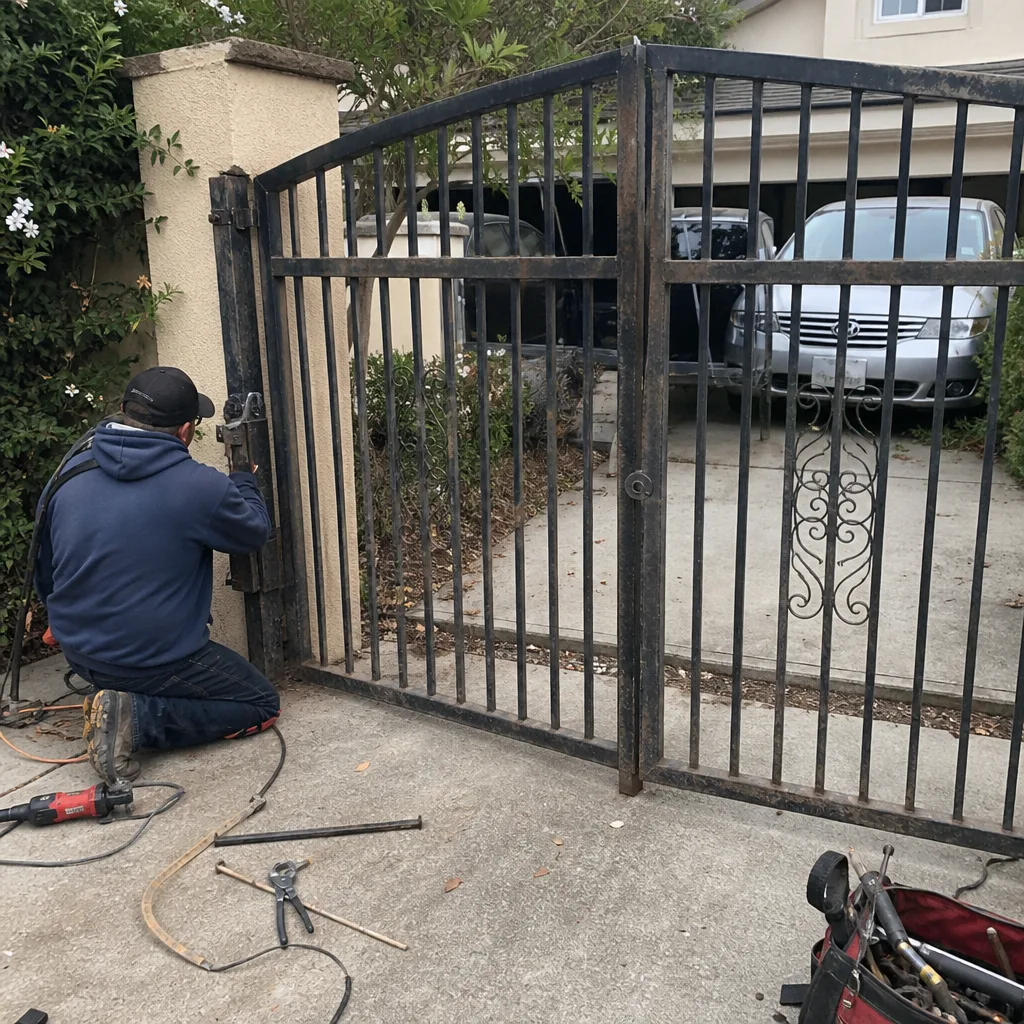 Before
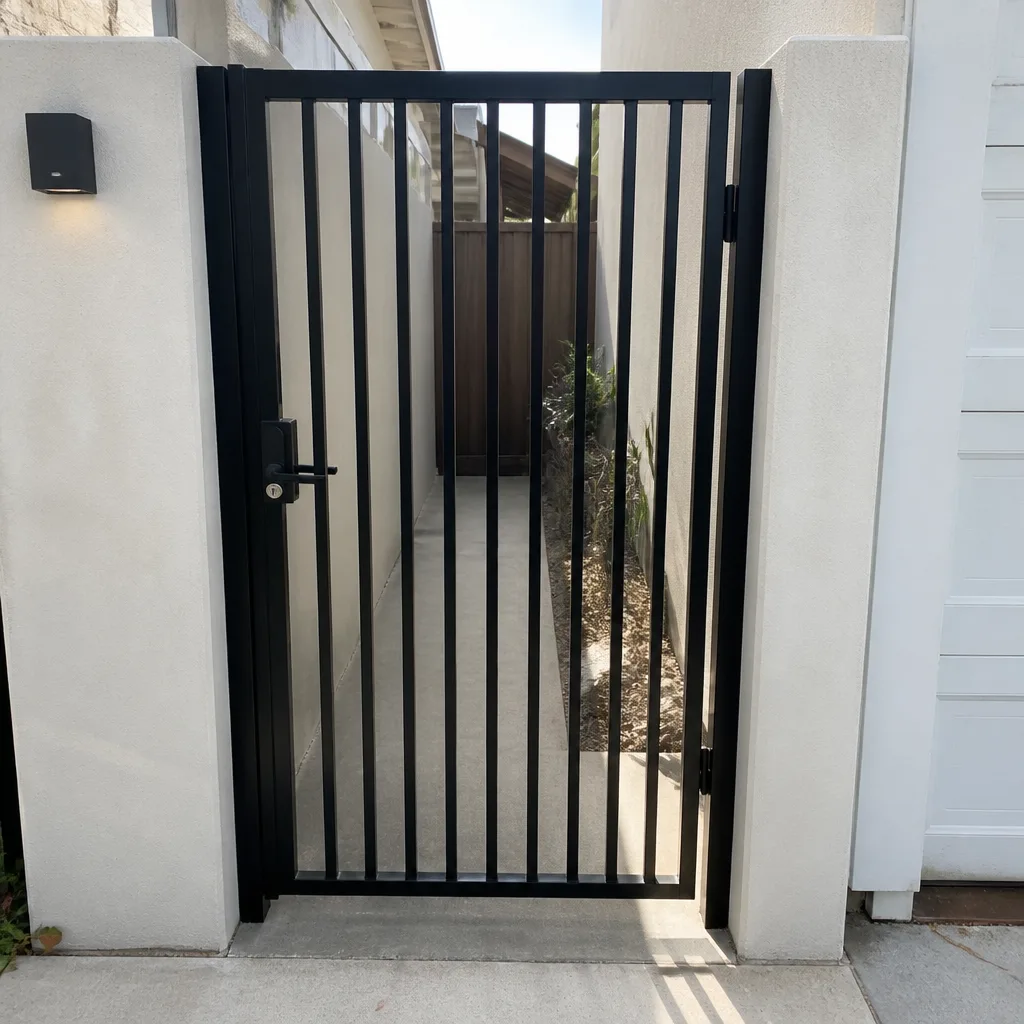 After
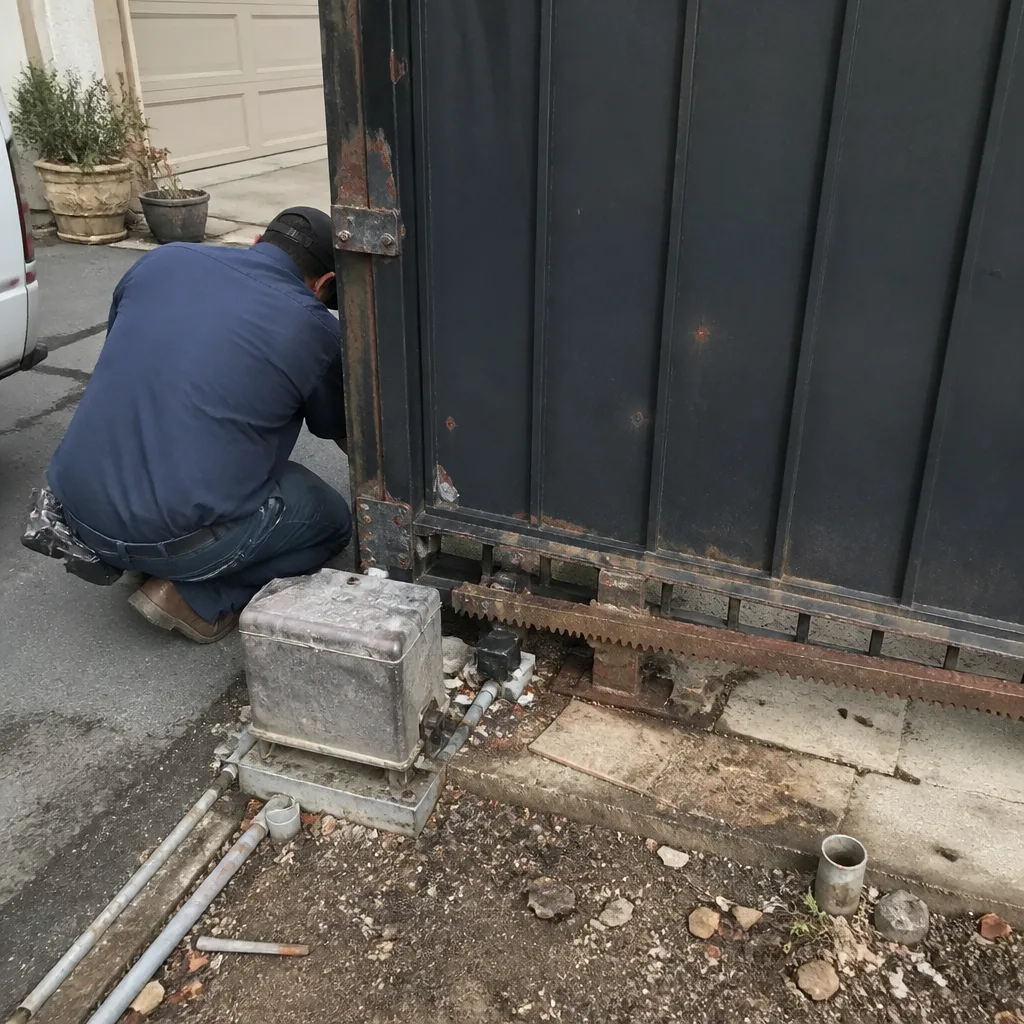 Before
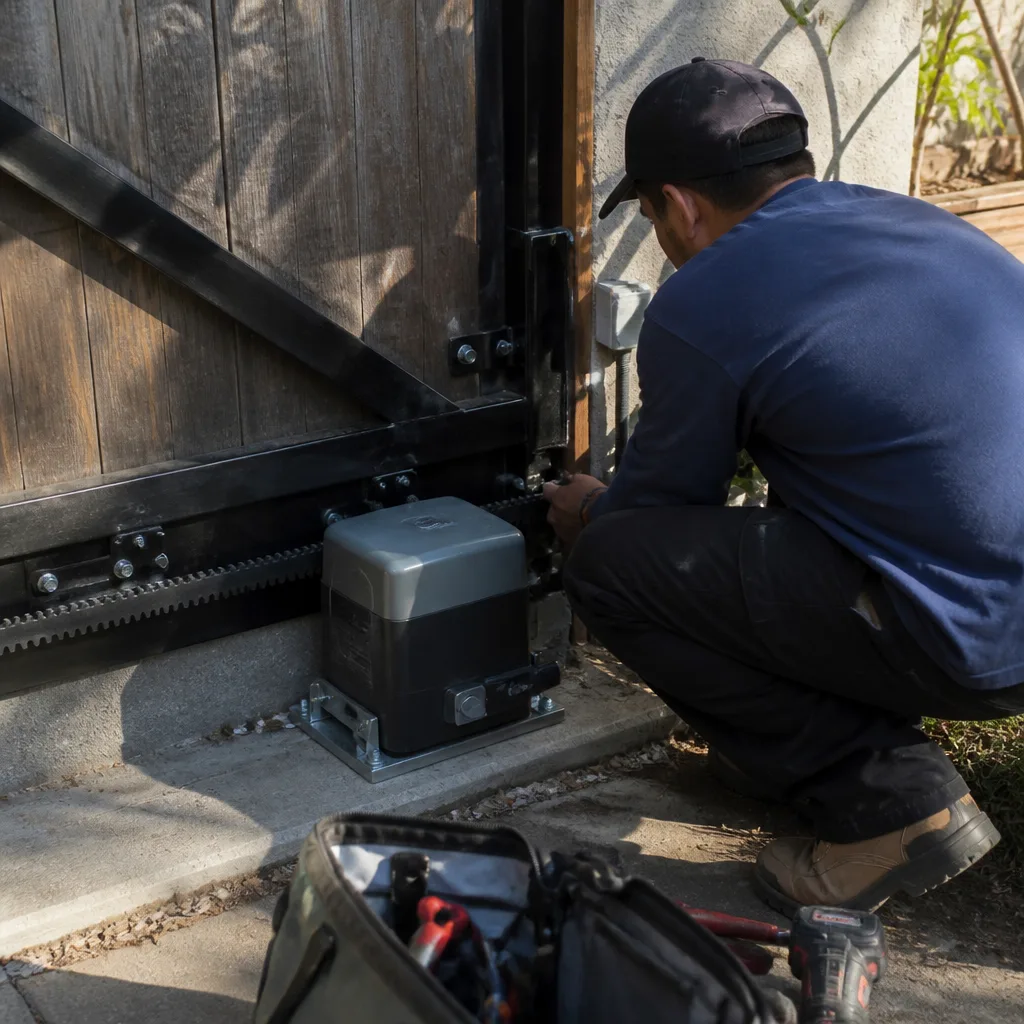 After
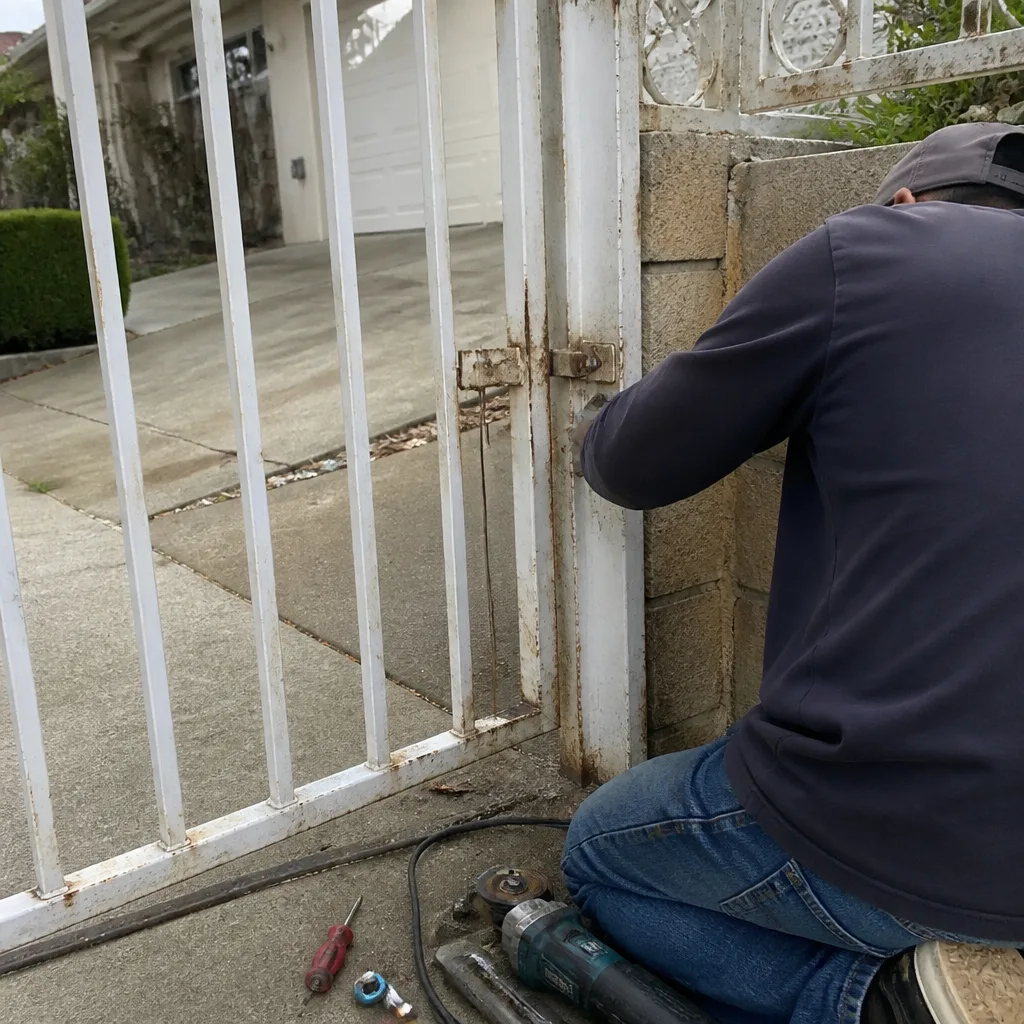 Before
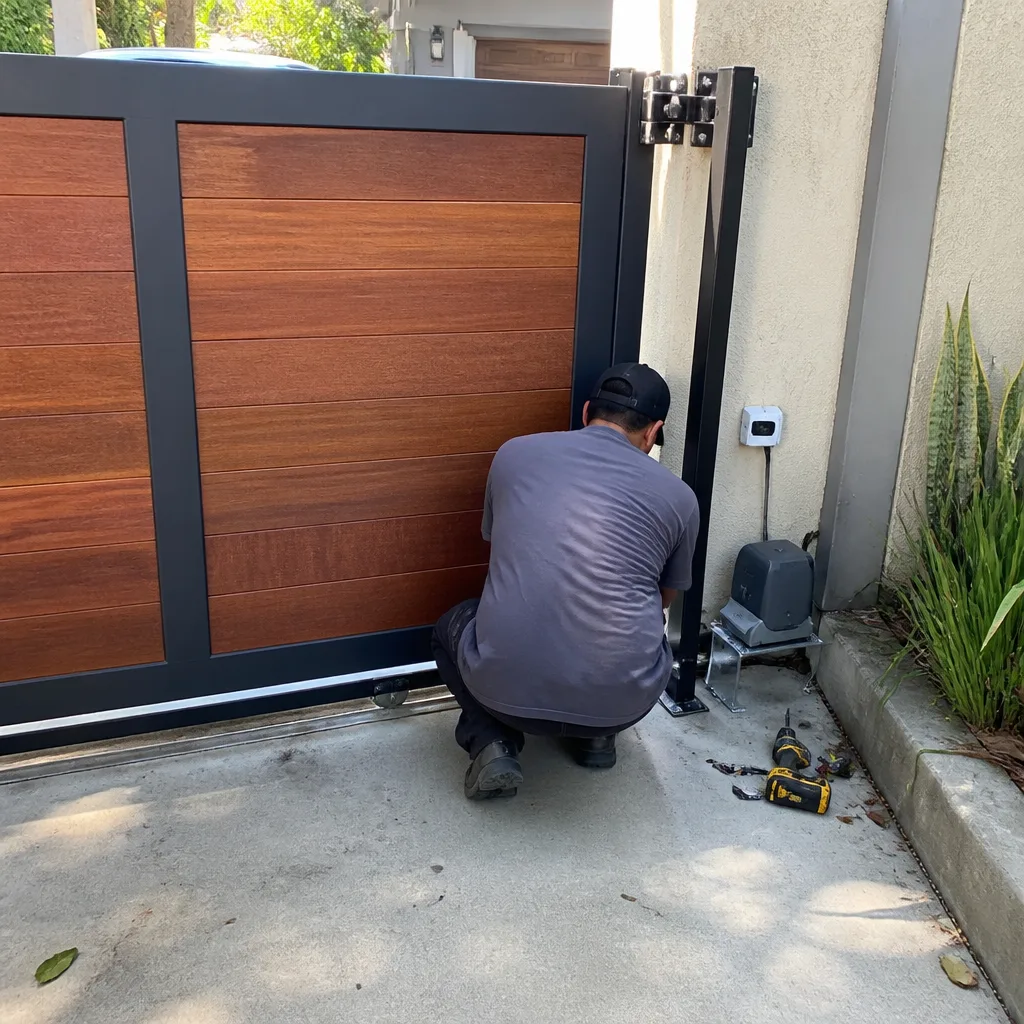 After