
Last updated November 2, 2026
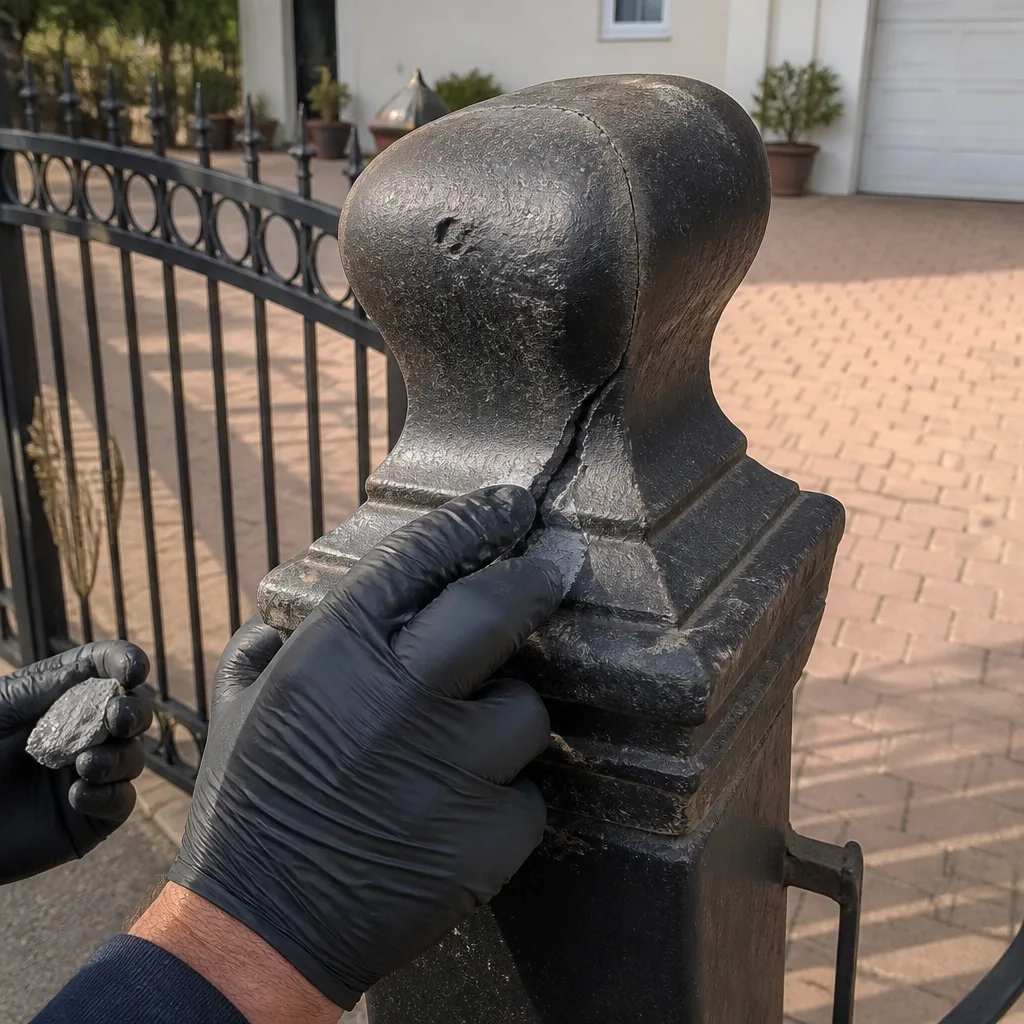
 Wrought iron
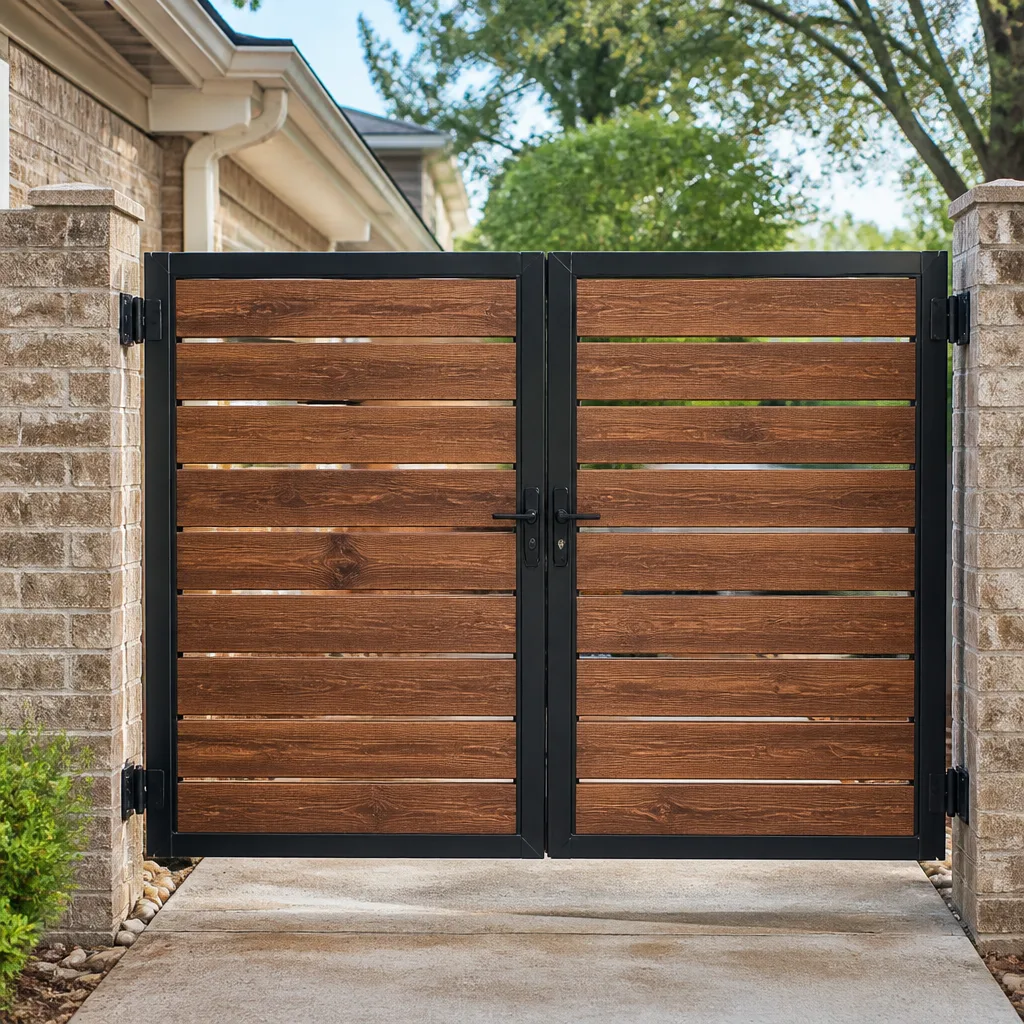 Wood & steel frame
 Farm & ranch
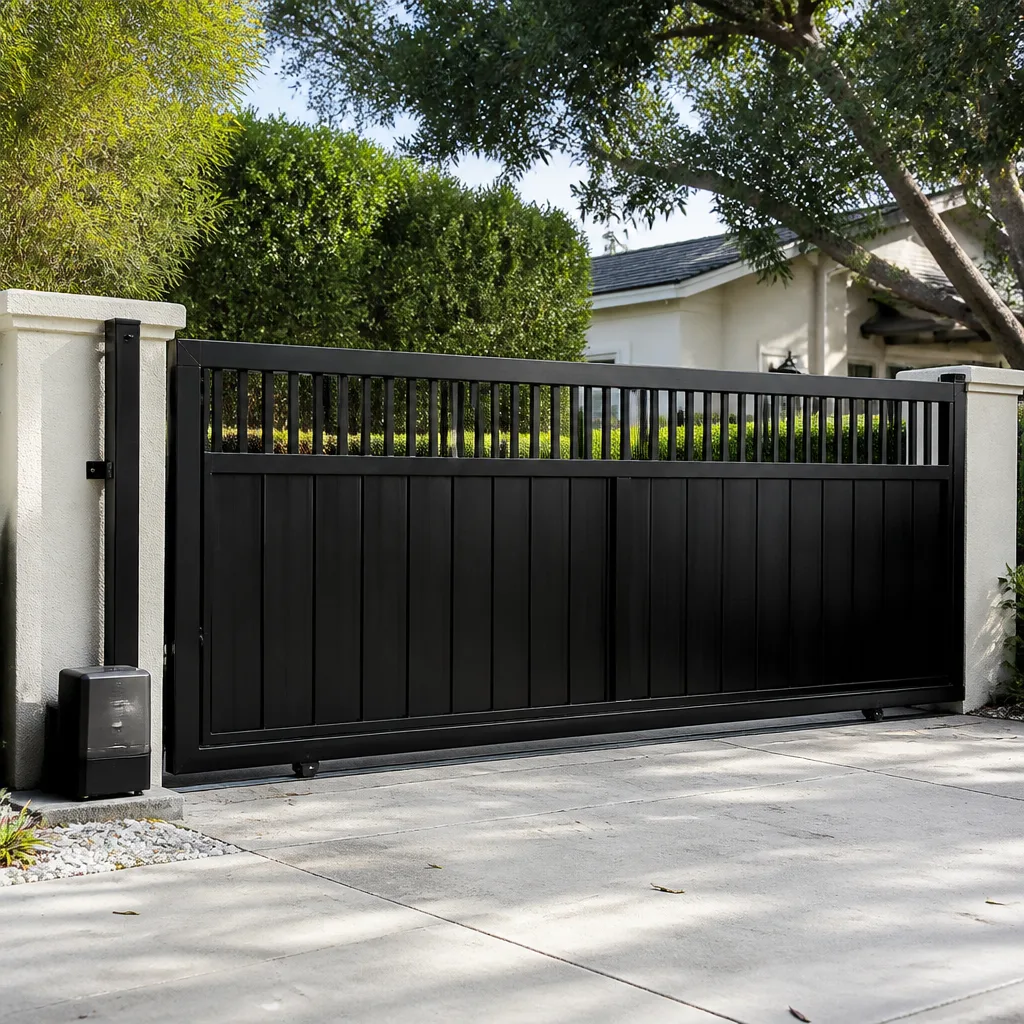 Sliding driveway gates
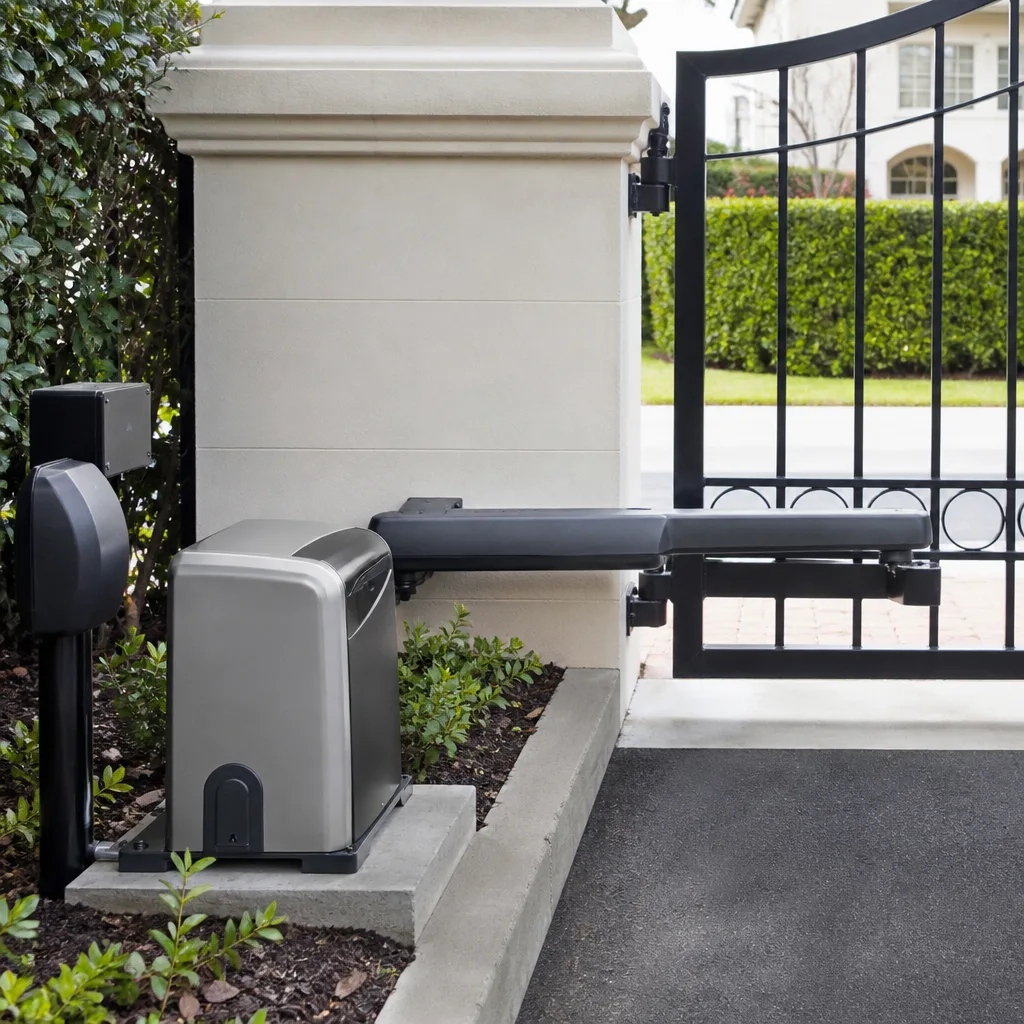 LiftMaster operators
Free on-site gate assessment - hinges, posts, and your LiftMaster or Nice gate operator checked before anything is quoted
The assessment is free and the quote is the invoice.
Get your free estimateSeasonal Gate Repair Care for Bay Terraces: Year-Round Homeowner’s Guide
Homeowners in Bay Terraces who skip seasonal gate care because “the weather’s mild here” are the same ones calling for emergency service when their operator fails during a December rain event. Corrosion doesn’t need hard winters to do damage this close to the coast. Bay Terraces doesn’t have four dramatic seasons, but it does have two distinct stress windows for gate systems: the dry summer heat that degrades rubber seals and electronics, and the winter marine layer period that accelerates corrosion on hardware. Understanding those two cycles is more useful than a generic spring/fall checklist. This guide covers what actually fails, when it fails, and the specific maintenance tasks that prevent most Bay Terraces gate breakdowns. For professional help, see our Gate Repair services.
Quick Answer
Seasonal gate care in Bay Terraces means preparing your gate system twice a year: once before the summer heat window (late May/early June) and once before the winter marine layer season (late October/early November). The two highest-ROI tasks are cleaning and re-greasing moving parts before each season and inspecting wiring insulation, seals, and control board enclosures after temperature or humidity swings. Skipping these windows is the direct cause of most emergency gate calls we see year-round in Bay Terraces. For The Complete Gate Repair Guide for Bay Terraces Homeowners, see our blog.
Styles & brands we work with
- Wrought iron
- Wood & steel frame
- Farm & ranch
- Sliding driveway gates
- LiftMaster operators
Table of Contents
- The Summer Heat Window: June Through September
- The Winter Marine Layer Window: November Through March
- The Two Highest-ROI Tasks for Bay Terraces Gates
- Adjusting Operator Force Settings Seasonally
- The Pre-Travel Gate Checklist for Extended Absences
- Seasonal Notes for Specific Gate Brands
- Common Mistakes to Avoid
- When to Call a Professional
- Frequently Asked Questions
The Summer Heat Window: June Through September
Bay Terraces summer temperatures regularly push into the 80s and 90s, sometimes higher during heat waves. That’s not Phoenix heat, but it’s enough to cause measurable changes in gate hardware and electronics. The failure patterns we see between June and September fall into three buckets: degraded wiring insulation, thermal expansion on slide gate tracks, and battery backup capacity loss.
UV Damage to Wiring Insulation
Most residential gate systems in Bay Terraces have at least some exposed low-voltage wiring running along fence lines or through conduit that gets direct afternoon sun. San Diego County gets roughly 146 clear days per year, and those UV rays are working on PVC wire insulation every single one of them. After five to seven years of coastal sun exposure, insulation becomes brittle. It cracks. Moisture from morning marine layer gets in, and then you have intermittent shorts that look like phantom operator failures.
What to check in June:
- Any wiring visible along the gate frame, posts, or fence line that shows chalky white or yellowed insulation
- Wire runs where the insulation has pulled back from terminal connections
- Conduit joints that have separated, leaving wire exposed
- Low-voltage connections at photocells, keypads, and loop detectors
If insulation is cracked but the conductor is intact, it’s often repairable with quality heat-shrink wrap. If the copper is oxidized green, the wire run should be replaced. We’ve replaced dozens of UV-damaged wire runs in Bay Terraces where homeowners assumed their operator motor had failed when the real problem was a $12 section of corroded wire.
Thermal Expansion on Slide Gate Tracks
Steel expands when it heats up. A 20-foot steel slide gate track can grow by roughly a quarter inch between a cold January morning and a hot August afternoon. Most tracks are installed with expansion joints, but after years of settling, rust, and minor impacts, those joints bind. What you get is a gate that slides smoothly in the morning and labors or stalls in the afternoon heat.
We service BFT and Linear slide gate operators across Bay Terraces, and thermal binding is one of the most common summer complaints. The operator isn’t failing. The track is fighting it. Check for:
- Rust scale build-up on the track surface that gets worse with heat expansion
- Track anchor bolts that have loosened and allowed the track to shift
- Gate guide rollers that are pressed too tightly against the track when hot
- Area where the gate itself rubs against a post or stop that it clears in cooler weather
A track that’s clean, properly aligned, and lubricated with a dry graphite or silicone spray handles expansion without strain. A track that’s already marginal will show symptoms every afternoon from June onward. For a full understanding of how Gate Repair in Bay Terraces addresses track issues, see our service overview.
Battery Backup Capacity in Heat
If your gate system has a battery backup, it degrades faster in heat. Lead-acid and AGM batteries lose roughly 30 to 50 percent of their rated capacity at sustained temperatures above 90 degrees. In Bay Terraces, backup batteries installed in metal control boxes with direct sun exposure can hit those internal temperatures even when the outside air is only 80. We’ve tested control box interiors in August that read 120 degrees. A battery that should run the gate for 30 cycles during a power outage might only manage 10 by late summer.
Test your battery backup in June, not October. Unplug the operator or kill the breaker and cycle the gate. If the gate moves slower than it did during last year’s test, or if the operator gives low-battery alerts, replace the batteries. Most backup batteries last three to five years in the Bay Terraces climate. If you’re past that window and you haven’t tested it, assume the battery is compromised.
The Winter Marine Layer Window: November Through March
Bay Terraces sits roughly 10 miles from the Pacific. The marine layer that rolls in overnight from November through March pushes humidity into the 80 to 90 percent range for hours at a stretch. Combine that with salt-laced ocean air and temperatures cool enough to cause condensation, and you have a corrosion environment that most inland gate guides never address. This is the season when Bay Terraces gate hardware fails, and it’s the exact timing when homeowners least expect it because “it doesn’t even freeze here.”
Salt-Air Corrosion on Exposed Hardware
Coastal San Diego air carries microscopic salt particles inland. They settle on gate hinges, latches, track rollers, chain drives, and operator internals. When the marine layer arrives, those salt deposits absorb moisture and create a brine that oxidizes steel and aluminum faster than dry inland air ever will. Bolts freeze. Hinges seize. Chain links grow surface rust that flakes into the operator drive sprockets.
Every November, before the wet months settle in, go through this checklist:
- Wash all exposed metal gate parts with fresh water and a sponge (no pressure washer; it drives water into seals)
- Check every bolt and screw for rust bloom; replace any showing orange or white corrosion
- Lubricate hinge points, rollers, and track with a dry silicone spray, not WD-40 (WD-40 strips existing grease and attracts dust)
- Check chain tension on chain-drive operators; salt corrosion accelerates wear on links and sprockets
- Inspect gate lock/latch mechanisms; sticky latches in July become fully seized latches in January
Moisture Ingress in Control Enclosures
The control board enclosure on a Viking or Ghost Controls operator should be sealed against weather. But seals dry out, gaskets crack, and the holes drilled for wiring often lack proper grommets. During the marine layer season, the air inside the enclosure cycles through dew point twice a day. Condensation forms on the circuit board. Corrosion follows.
The damage is progressive. First, a few sporadic sensor faults. Then intermittent operator failures that reset after things dry out. Eventually, a short that takes out the control board entirely. The frustrating part is that this progression can take weeks or months. Homeowners call it a “confusing ghost problem” until we open the enclosure and find boards with green corrosion tracks across the solder points. By then the repair is a board replacement instead of a gasket fix.
Check your enclosure twice a year. Look for:
- Warped or cracked enclosure lids that no longer seat flush
- Missing or hardened rubber gaskets around the lid edges
- Wire entry points without grommets or sealant
- Any sign of rust or white powder inside the enclosure
- Insect or spider droppings that bridge circuit board contacts
Photocell Misalignment from Condensation
Photocell safety sensors, also called photo eyes, are the most misdiagnosed gate component in coastal climates. They sit low, typically four to six inches off the ground. Dirt, moisture, and temperature swings cause minute shifts in their mounting brackets. Over the course of a season, the beam drifts just enough that the gate refuses to close or reverses unexpectedly. Condensation on the lens dome causes the same symptom on a temporary basis.
In Bay Terraces, we see a spike in photocell alignment calls during the first heavy marine layer weeks of November and December, and again after the first rain of the season. The fix is simple: clean the lens, check the bracket is still tight, and align the beam. But if you don’t know the symptom, it looks like a failing operator. We can walk through what an Electric Gate Repair in Bay Terraces call actually involves, but checking the photo eyes first saves you the diagnostic fee in many cases.
The Two Highest-ROI Tasks for Bay Terraces Gates
If you do nothing else on this page, do these two things. In the Bay Terraces climate specifically, they prevent more gate failures per hour of effort than everything else combined. The first is cleaning and re-lubricating every moving part twice a year. The second is testing the auto-reverse and photocell safety systems on the same schedule.
Task 1: Clean and Re-Lubricate Moving Parts (May and October)
- Spray down the gate frame, hinges, track, and rollers with plain water to remove salt film, dust, and spider debris
- Wipe down all moving contact surfaces with a dry rag
- Apply a dry silicone lubricant to hinge pins, roller bearings, track wheels, and pivot points
- Apply a light coat of white lithium grease to any chain drives, worm gears, or screw drives that call for grease in the manual
- Wipe away excess lubricant; a thick grease layer collects grit and dust, which creates a grinding paste
- Cycle the gate four or five times to work the lubricant into joints
- Listen for changes in motor pitch or grinding that indicate friction points
The whole process takes 30 to 45 minutes for a typical single swing or slide gate. Doing it in May and October aligns with the transition into the two stress windows. A gate that squeaks in September is already telling you it’s dry; a gate that groans and slows in December is telling you the salt-laden moisture has been working on unprotected steel. Keep the surfaces clean before they corrode, and the hardware lasts years longer than it does without attention.
Task 2: Test the Safety Systems (March and September)
The auto-reverse mechanism is what stops the gate when it hits something, and the photocell is what prevents it from starting to close when something is in the path. Both degrade passively. They don’t fail loudly. They just stop working, and you find out when the gate closes on a car bumper or a family member.
Test the auto-reverse: place a roll of paper towels or a sturdy cardboard box in the gate’s closing path and close the gate. It should reverse immediately on contact and not continue pushing. If it strains against the object for more than a second, the force setting is too high or the mechanism has failed.
Test the photocells: with the gate open, wave an object across the beam and press close. The gate should refuse to move. If it closes anyway, the photo eye is misaligned, dirty, or disconnected. Both tests take less than ten minutes.
Adjusting Operator Force Settings Seasonally
A gate that works perfectly in summer may strain its motor fighting thermal contraction in January. That’s not a metaphor. Steel and aluminum contract in the cooler Bay Terraces winter. Hinges bind slightly. Track surfaces get grittier from winter moisture. Drive belts and chains tighten a fraction. The motor has to push harder to move the same gate it moved easily in August. If the operator force setting was tuned at the edge of adequate in summer, it can be insufficient in winter, and the gate will stall, reverse mid-cycle, or trip its thermal overload.
The force setting is a potentiometer on most operator control boards. On BFT, Viking, and Ghost Controls residential operators, it’s typically a small dial or digital setting adjusted through the programming menu. The manufacturer default is usually a midpoint that works for most installations, but every gate is different, and the correct seasonal setting for Bay Terraces is typically one notch lower (softer) in summer and one notch higher (more force) in winter.
Adjusting force settings is not a task we recommend for homeowners without a manual and a multimeter. Setting it too high defeats the safety reverse. Setting it too low causes nuisance stops. If your gate hesitates, reverses for no reason, or triggers overload beeps when the temperature drops, that’s the symptom of a boundary force setting. A technician who knows your operator brand can read the motor current and set the force properly. For homeowners with Viking or Ghost Controls systems, the seasonal adjustment is a straightforward part of Gate Installation or a repair call. The key point: don’t assume the motor is failing. Check the force setting against the season first.
The Pre-Travel Gate Checklist for Extended Absences
Bay Terraces homeowners travel. Some are military families on deployment cycles. Some leave for weeks in summer. Rental properties sit vacant between tenants. A gate that fails on day three of a 30-day absence becomes a security and access problem that compounds because no one is there to notice. Before any absence longer than two weeks, run this list:
- Lubricate all moving parts using the May/October routine above
- Test the auto-reverse and photocell safety functions
- Check the battery backup if your system has one; replace if it’s older than four years
- Set the gate opener to manual release and verify the gate swings or slides freely; if not, fix the mechanical problem before you leave
- Clean debris out of the track or gate path; trim any vegetation that could grow into the path while you’re gone
- Make sure the keypad code still functions and the keyed release mechanism turns freely (a sticky release that’s seized when you return is a common Bay Terraces issue)
- If the property is a rental with a gate code, set a temporary code and verify it with your property manager before departure
- Write down the gate’s brand and model near the operator for anyone who might need to call for service while you’re away
This takes under an hour. The payoff is not returning to a gate that’s been dead for three weeks, with a dead battery backup and a control board corroded by marine layer condensation that sat untouched. We’ve seen exactly that scenario more times than we can count.
Seasonal Notes for Specific Gate Brands
Different operator brands have different seasonal failure patterns in the Bay Terraces climate. We work with nine brands, and the quirks are real. Here’s what to watch for on three of the most common systems in the neighborhood:
BFT Gates
BFT operators are popular in Bay Terraces for their hydraulic and electromechanical models on heavy swing gates. We see BFT hydraulic pumps fail most often in early winter, when cold fluid thickens and contaminants in the system become more viscous. If your BFT gate slows in November, that’s often the first sign. Have the hydraulic fluid checked and the filter changed before the winter marine layer hits hard.
Linear Gates
Linear operators, especially the slide gate models, are known for solid electronics but vulnerable limit switches. In the Bay Terraces salt-air environment, limit switch corrosion causes intermittent “gate travels too far” errors that show up most in wet weather. If your Linear gate slams or over-travels during winter, suspect the limit switches before the control board.
Viking and Ghost Controls
Viking and Ghost Controls have strong residential presences in San Diego. The common failure point for both in coastal climates is the control board enclosure gasket. Both brands run on exposed board designs that don’t tolerate humidity well once the enclosure seal degrades. If you see rust bloom on the enclosure hinge or the lid doesn’t seat flush, replace the gasket now. A tube of silicone gasket sealant is cheaper than a control board.
Knowing the failure pattern for your brand is half of prevention. We stock OEM-compatible parts for BFT, Linear, Viking, and Ghost Controls, among others, so the right part goes in the first time. See our Gate Repair Bay Terraces home page for the full brand list and service scope.
Common Mistakes to Avoid
- Ignoring slow operation. A gate that moves slower in November is not “just cold.” It’s a sign the motor is fighting mechanical resistance. Left unaddressed, it becomes a burned-out motor in February. Fix the resistance at the first sign.
- Using WD-40 for everything. WD-40 is a water displacer, not a long-term lubricant. It dissolves existing grease and attracts dust in Bay Terraces’s dry summers. Use dry silicone spray for most gate applications.
- Power-washing the gate and operator. Pressure washers drive water into seal gaps, electrical fittings, and bearing seats. The marine layer does enough moisture damage on its own. Wash with a garden hose and a sponge.
- Skipping the battery backup test. A backup battery that hasn’t been tested in three years is not a backup; it’s a paperweight. Test it in June and October, and replace it every four to five years in coastal Bay Terraces conditions.
- Overtightening or undertightening bolts. Overtightened gate hinge bolts bind in winter when metal contracts. Undertightened bolts allow movement that accelerates ovaling of the holes. Tighten to manufacturer spec and check with a torque wrench when you can.
- Ignoring spider webs. Spiders and ants love the warm cavities inside gate control boxes. Their bodies and webs bridge electrical contacts, causing phantom shorts. Clean out control enclosures with a dry brush or compressed air twice a year, no liquid cleaners.
When to Call a Professional
Some seasonal gate maintenance is homeowner work. Some is not. Call a gate specialist when you see any of these: the gate slams or travels past its limits, the motor hums but doesn’t move the gate, the control board shows repeated error codes after a rain, the operator trips a breaker instantly, the auto-reverse doesn’t work when tested, or you smell burning from the motor area on repeated cycles. These are not maintenance items; they’re repair items. For tips on Choosing the Right Gate Repair Brand: A Buyer’s Guide for Bay Terraces, visit our blog. Gate Repair Bay Terraces offers free estimates in Bay Terraces. Call (877) 573-0794 and we’ll diagnose the system in person.
Frequently Asked Questions
Twice a year, in May and October. Those two months align with the transition into summer heat and winter marine layer conditions, which are the two stress windows unique to Bay Terraces’s coastal San Diego climate. Each service is about an hour of cleaning, lubricating, testing, and inspecting.
A seasonal maintenance visit in Bay Terraces typically costs $100 to $250 for a standard single gate, depending on the system’s condition and whether any parts like gaskets, batteries, or sensors need replacement. The quote is agreed before any work starts. Call (877) 573-0794 for an exact price on your system.
Thermal contraction is the usual culprit. Steel and aluminum parts shrink slightly in winter, tightening hinges and track tolerances that were loose in summer heat. The motor has to push harder, which trips overload protection. Adjusting the force setting seasonally, or freeing up the mechanical resistance, usually resolves it without motor replacement.
Same-day service is available for most Bay Terraces gate repairs, depending on current scheduling. Emergency repairs like a gate stuck open or a failed operator are prioritized. Call (877) 573-0794 and describe the problem; we’ll give you a real arrival window.
Lubricate moving parts, test the safety reverse and photocells, check the battery backup, set the gate to manual release to confirm it moves freely, clean the track path, and verify your keypad code. Most gate failures during absences are avoidable with 45 minutes of preparation.
Yes. Salt particles from Pacific marine air settle on gate hardware and combine with nightly condensation from the marine layer. The resulting brine accelerates corrosion on hinges, tracks, bolts, and control board internals. Inland gate hardware lasts noticeably longer than identical hardware installed in Bay Terraces without seasonal cleaning. The fix is simple: wash and re-lubricate metal components every May and October.
The Bottom Line
Bay Terraces has two gate stress seasons: dry summer heat and corrosive winter marine layer. Each demands a specific set of maintenance actions. Before summer, check wiring insulation, track expansion, and battery backup capacity. Before winter, wash off salt film, lubricate moving parts, inspect control board seals, and test photocells. The two highest-ROI tasks are the twice-yearly lube-and-clean and the safety system test. Skip the generic four-season checklist; it doesn’t apply here. Check our blog for more guides & resources. Do the two windows, and your gate will outlast the neighbors who didn’t.
Written by the team at Gate Repair Bay Terraces, serving Bay Terraces since 2018.
See the difference
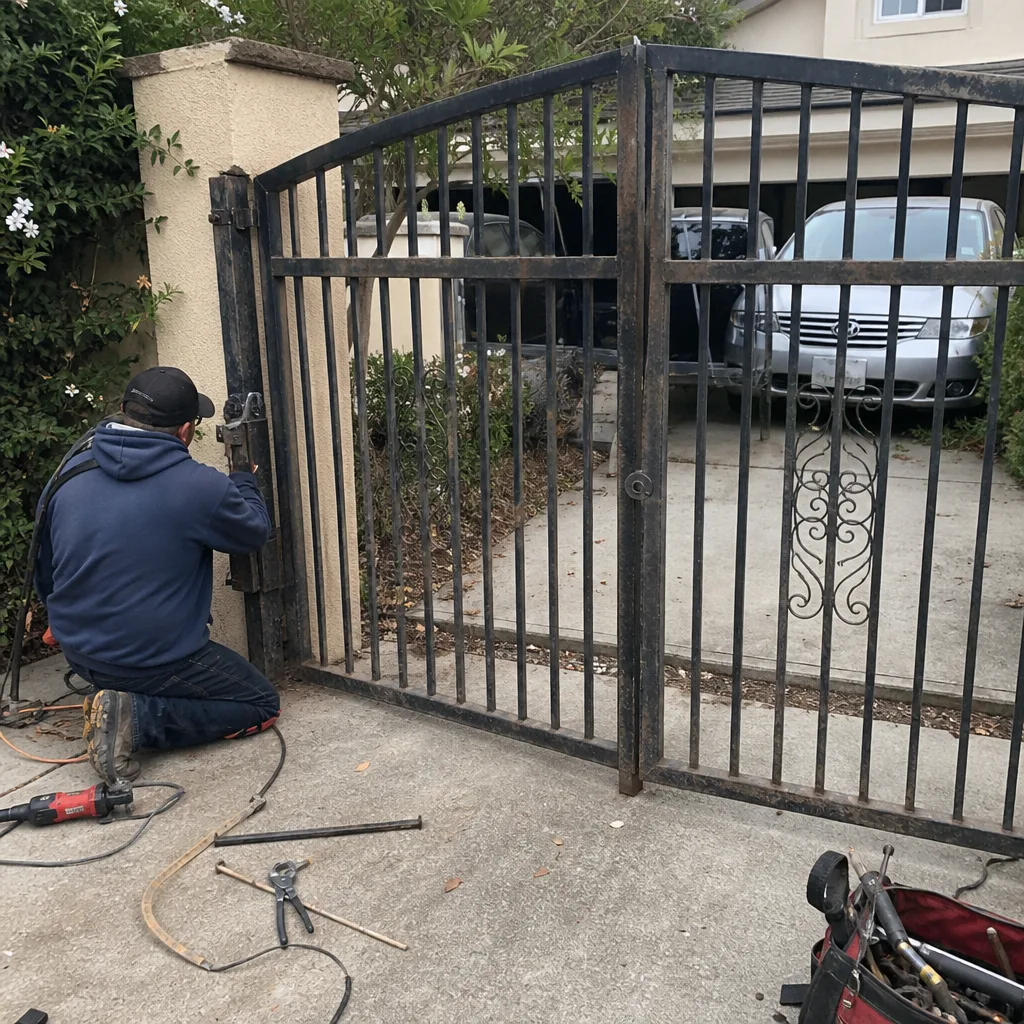 Before
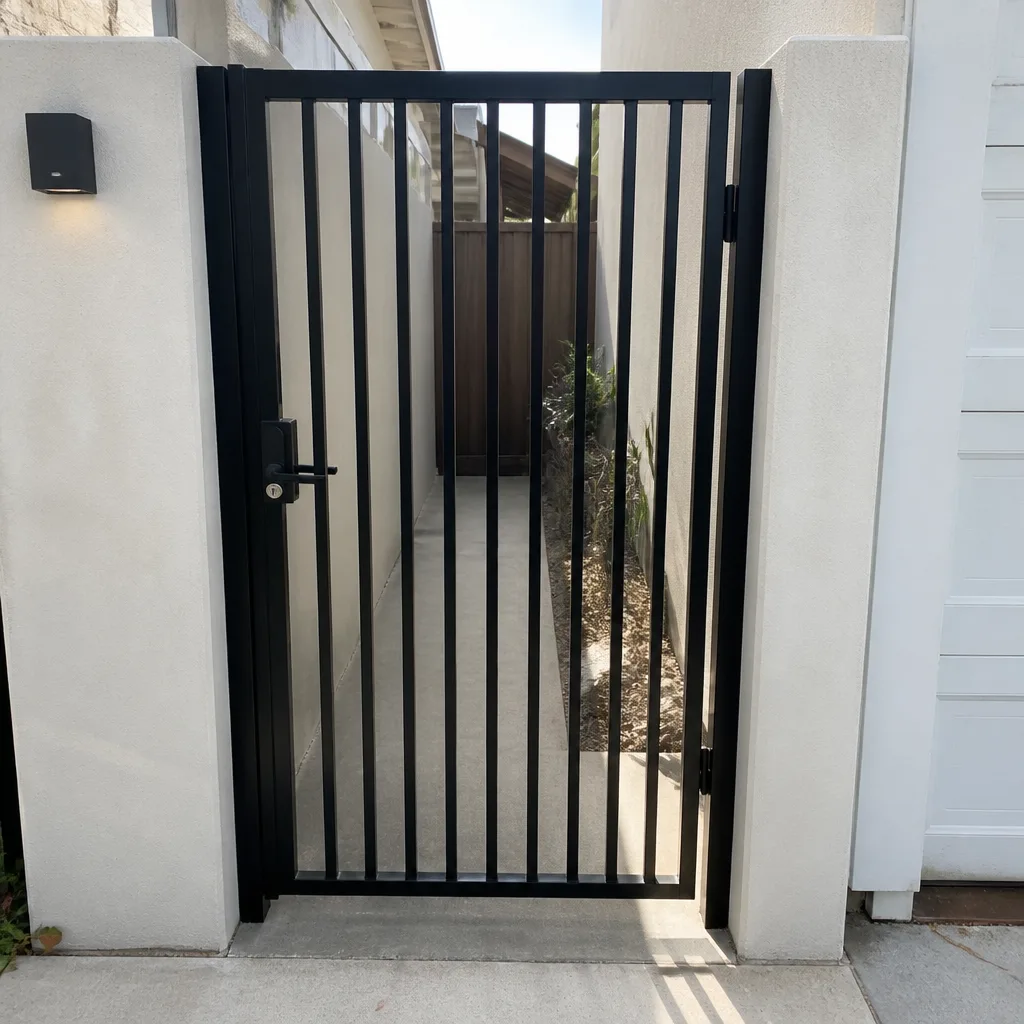 After
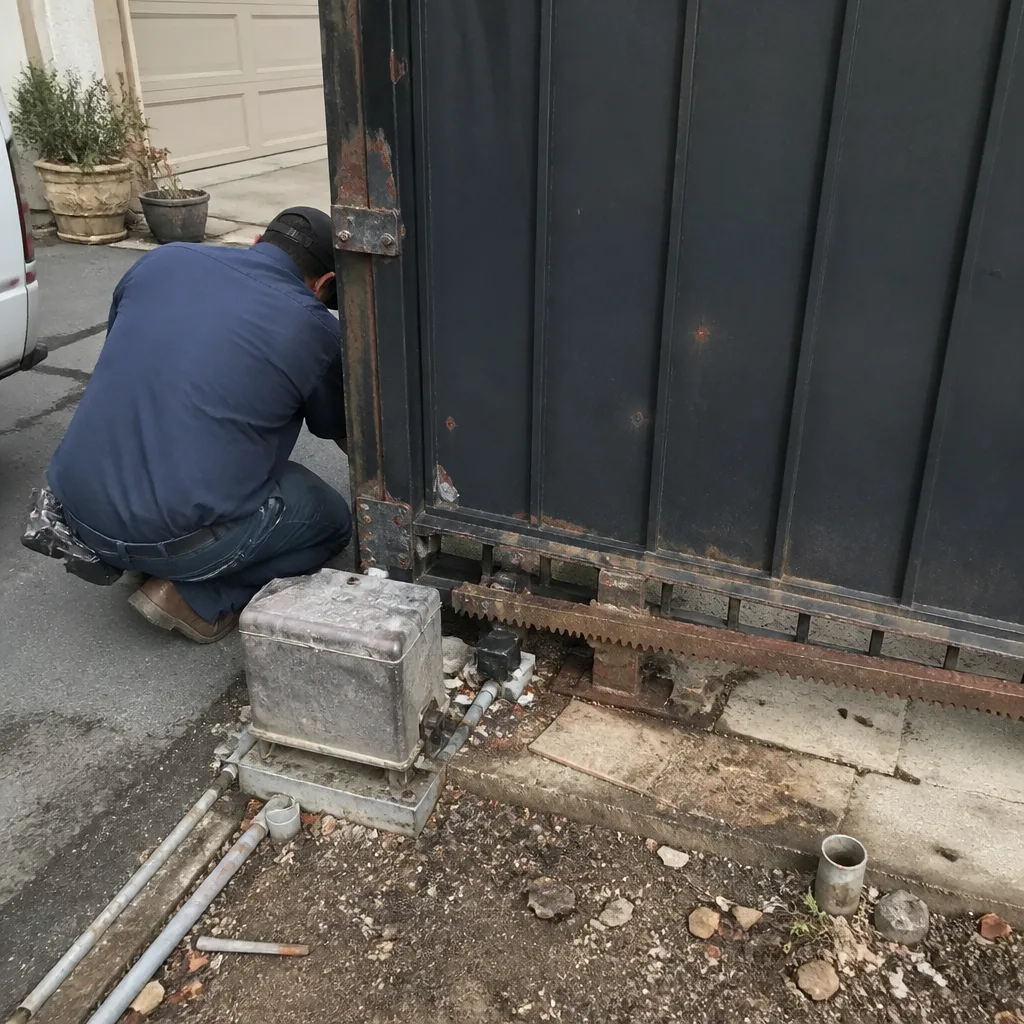 Before
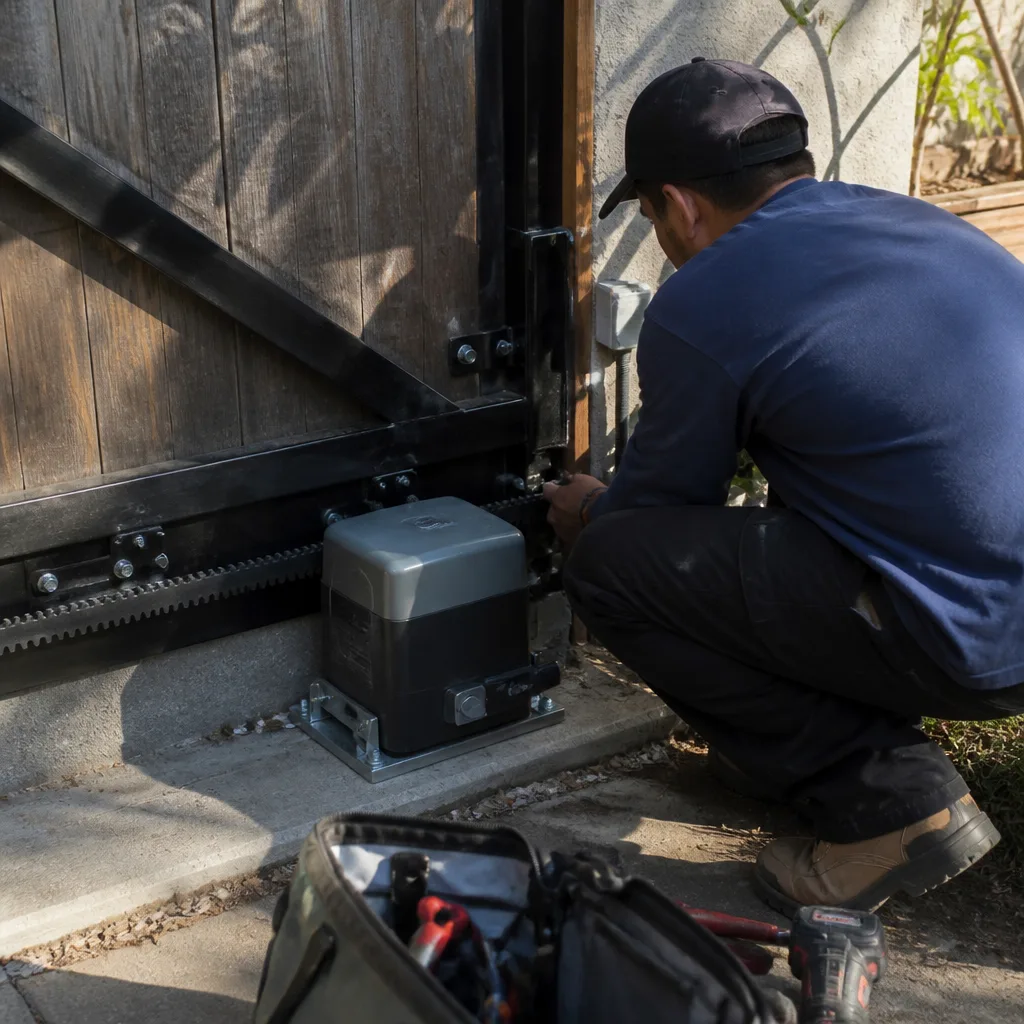 After
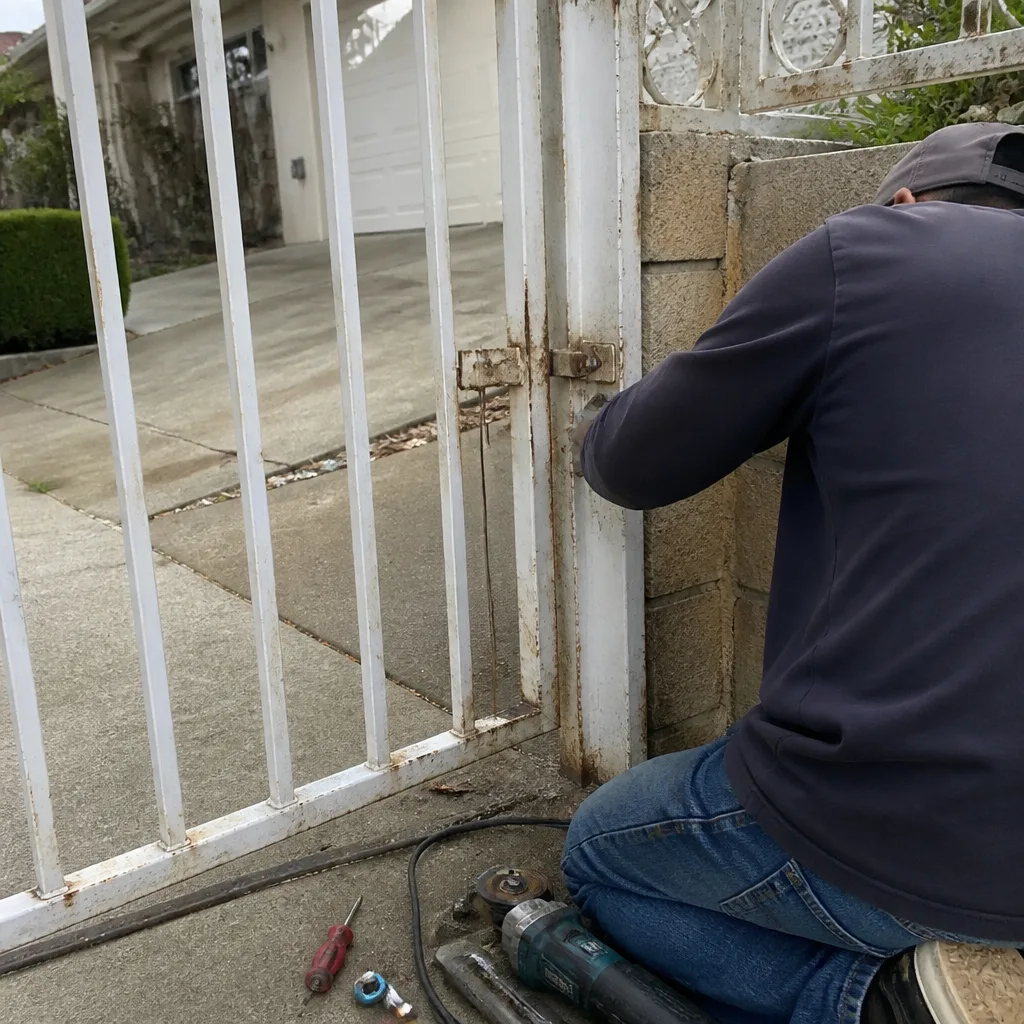 Before
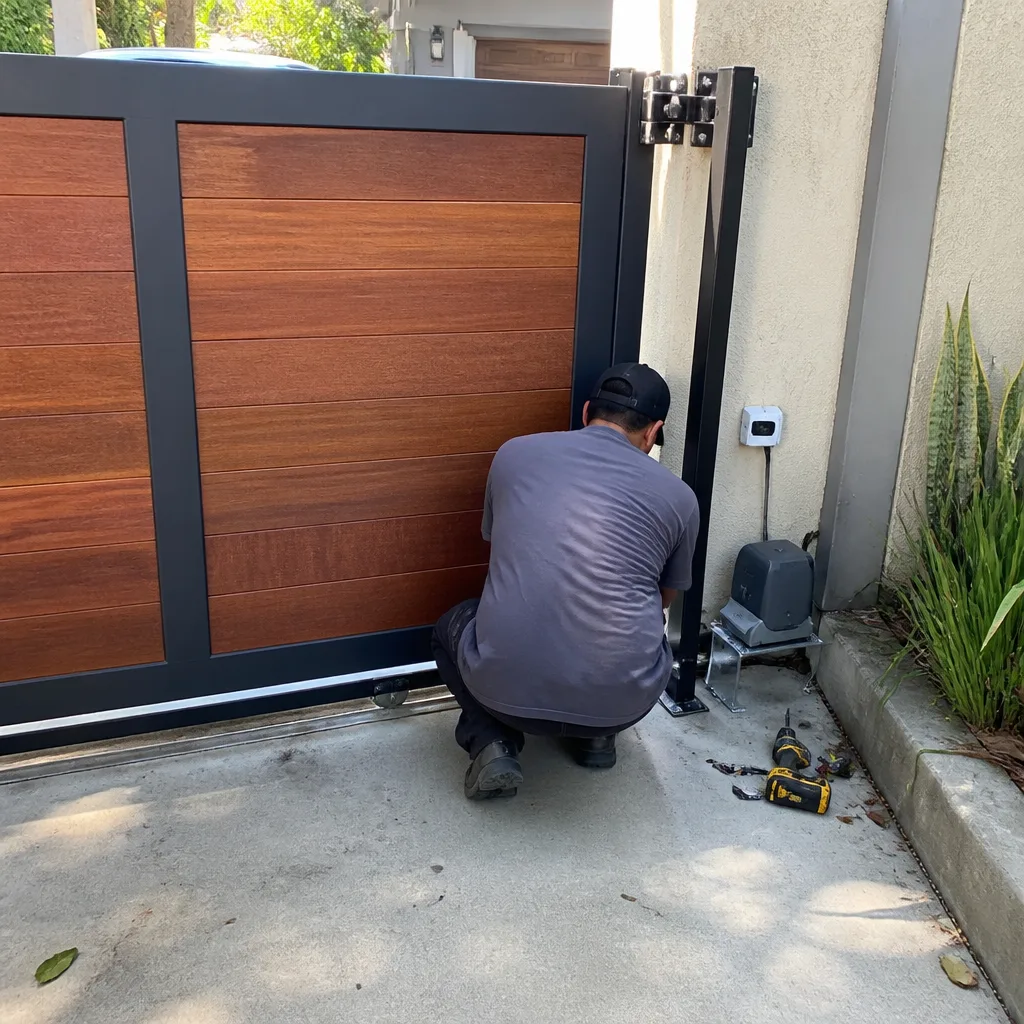 After