
Last updated November 2, 2026
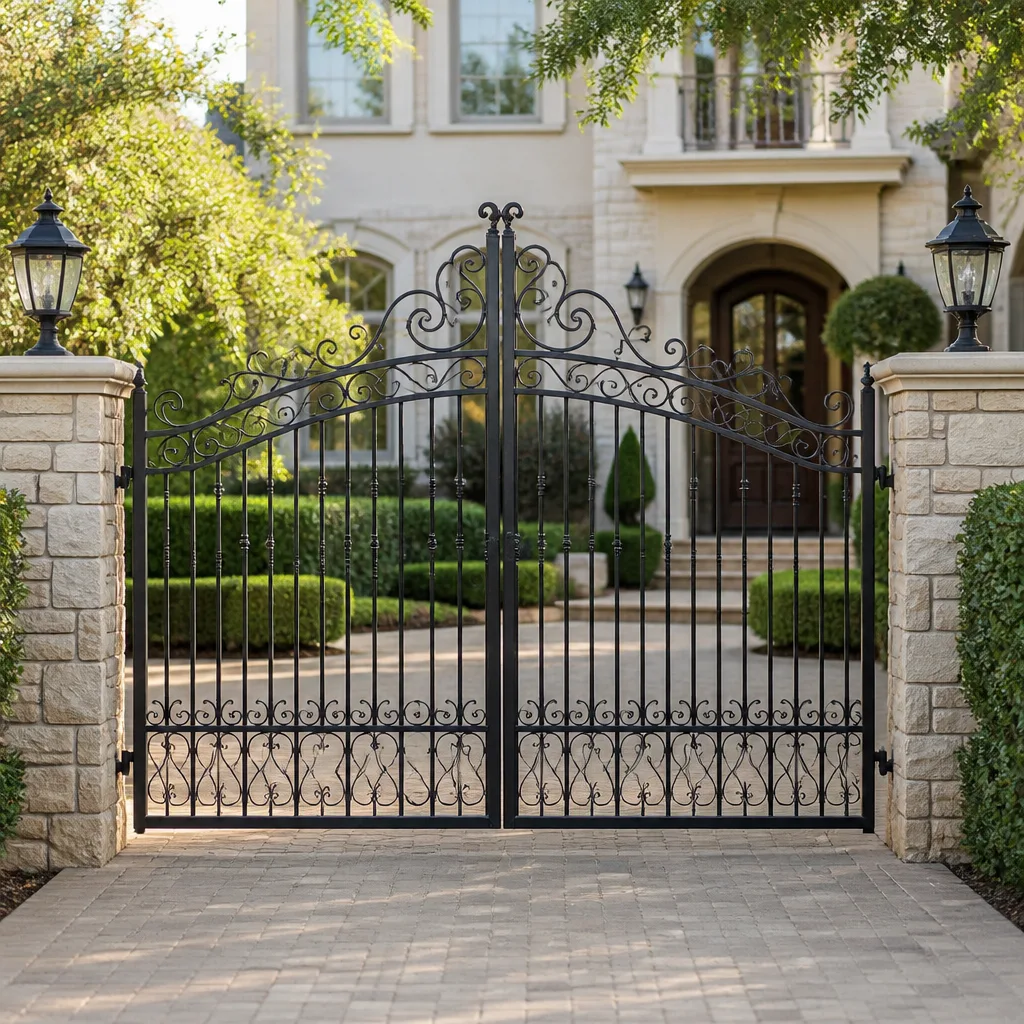 Wrought iron
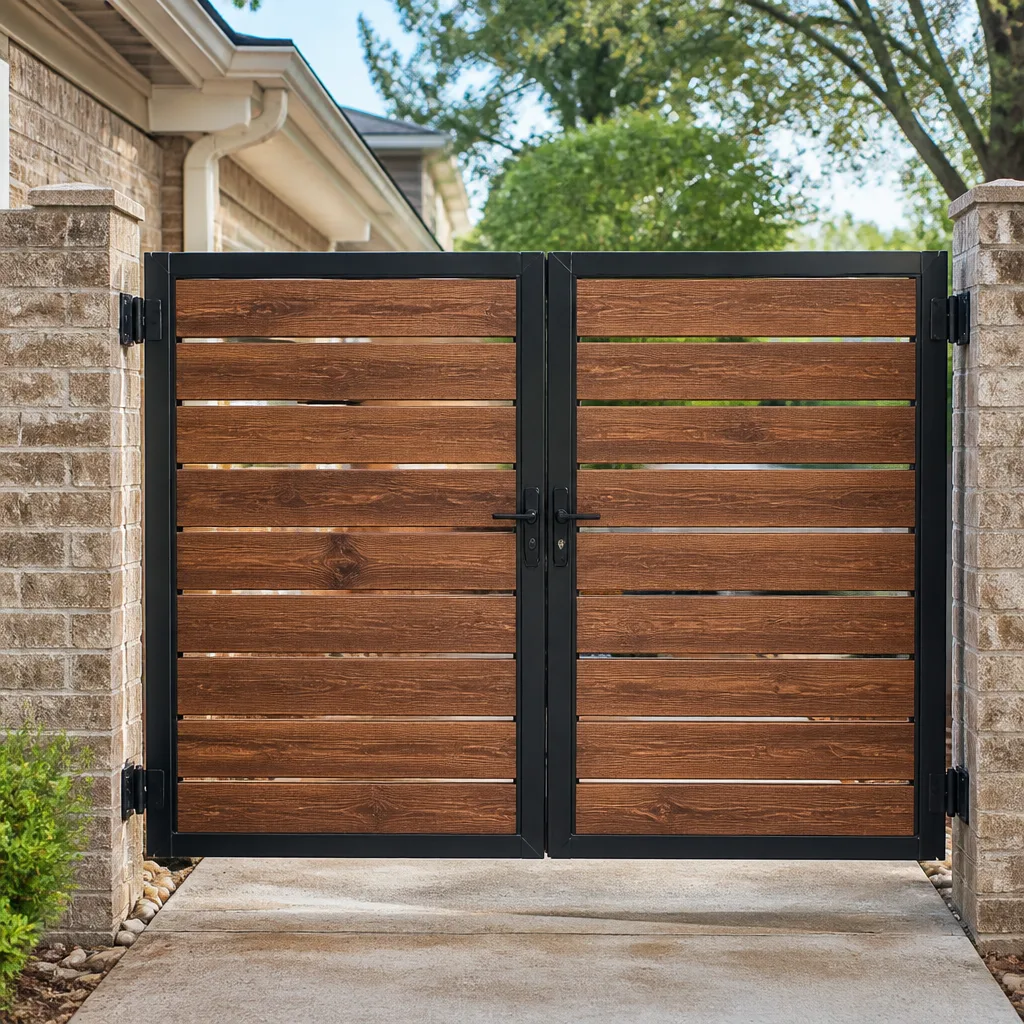 Wood & steel frame
 Farm & ranch
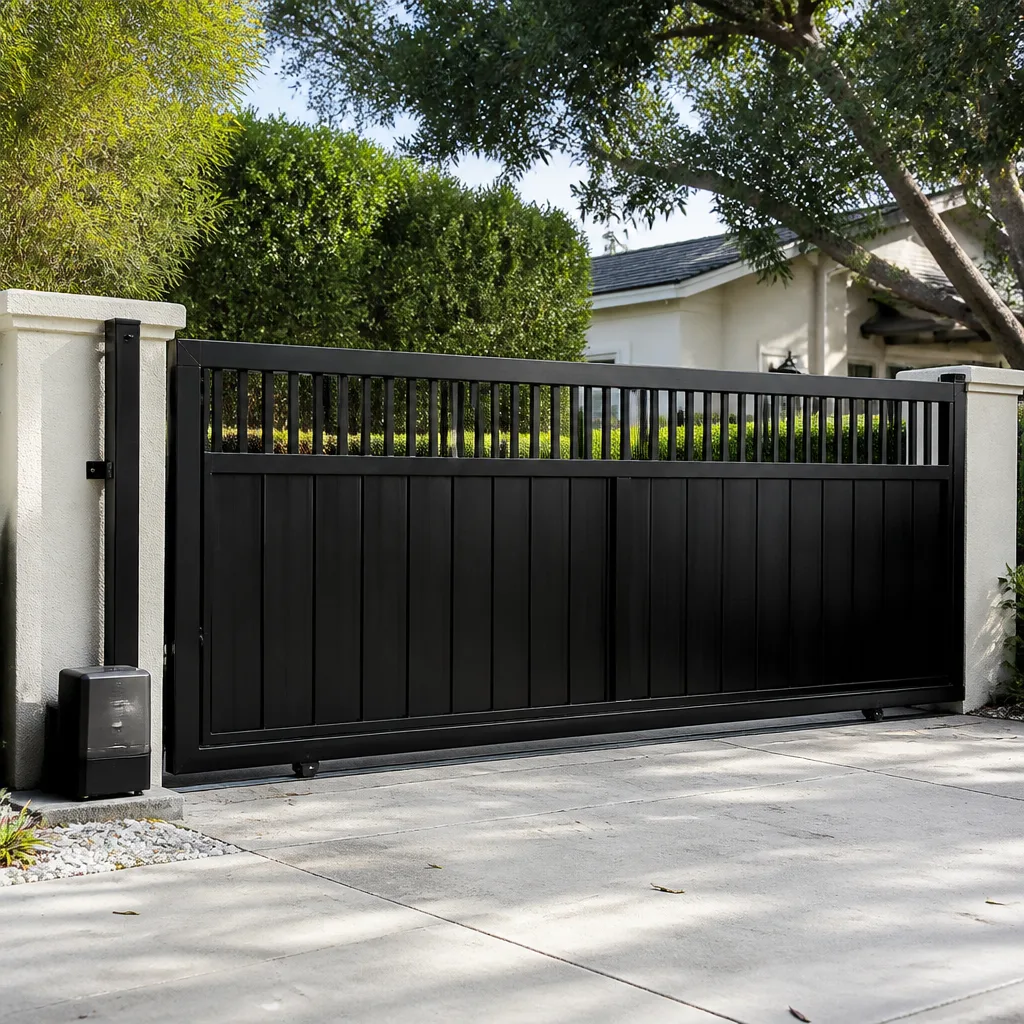 Sliding driveway gates
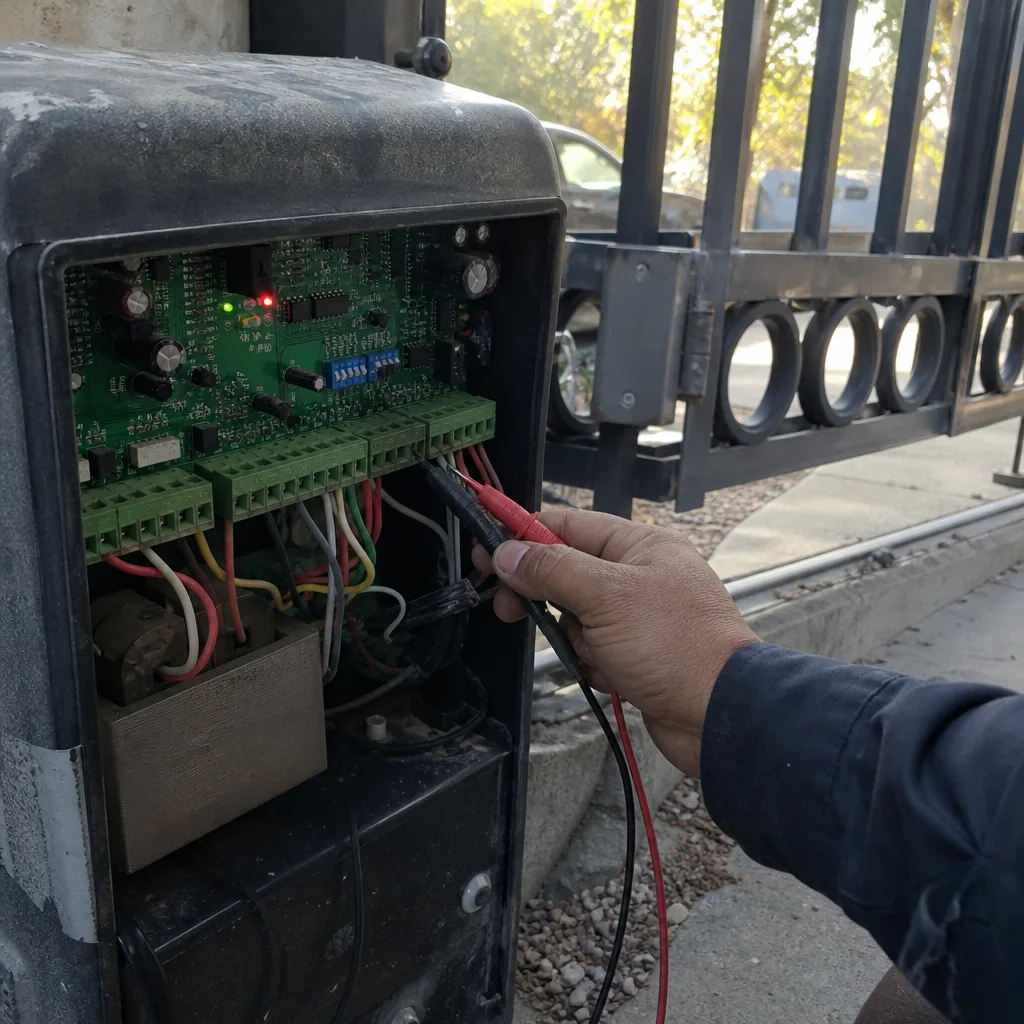
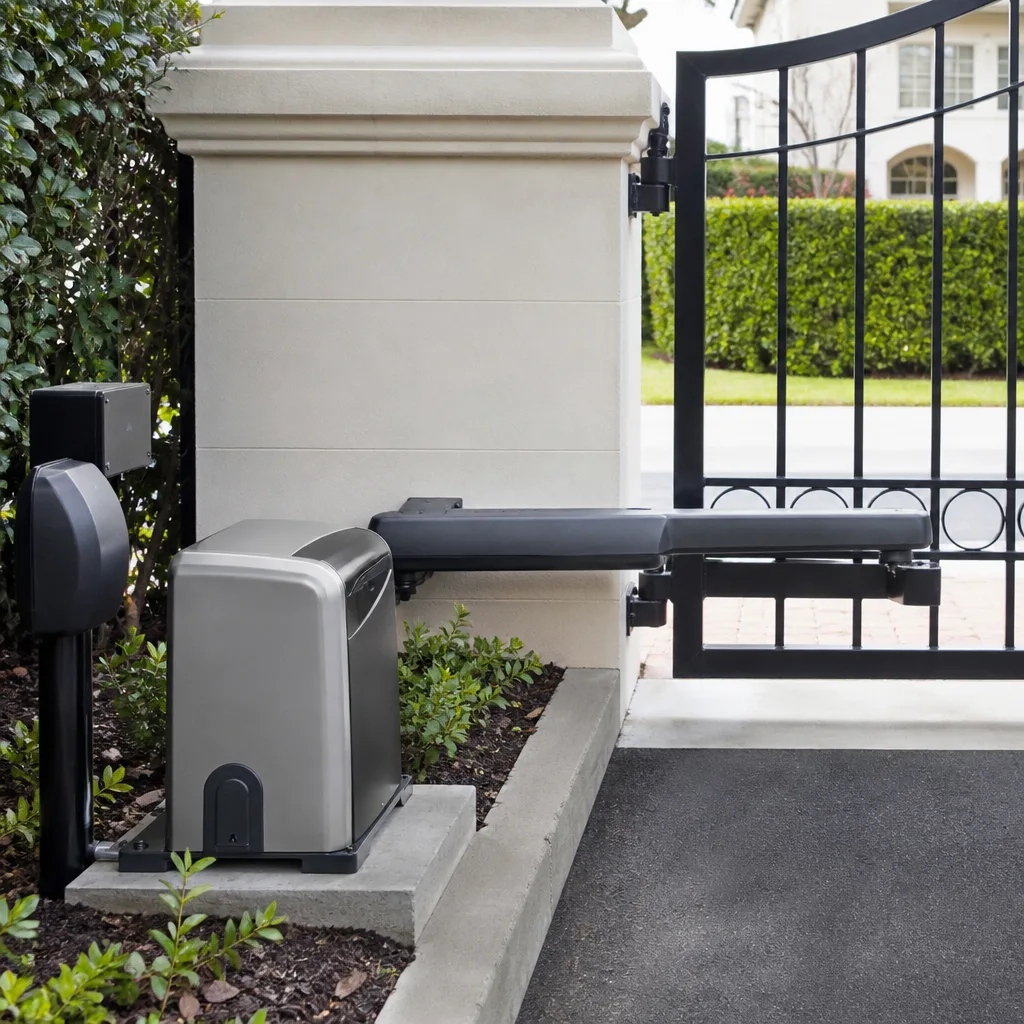 LiftMaster operators
Free on-site gate assessment - hinges, posts, and your LiftMaster or Nice gate operator checked before anything is quoted
The assessment is free and the quote is the invoice.
Get your free estimateGate Repair Permits, Codes & Inspections in CA: What You Need to Know
Here’s a sentence most Bay Terraces homeowners never expect to hear: a gate that opens and closes perfectly can still be legally out of compliance, and the liability for that sits squarely on the homeowner, not whoever installed it. California’s gate safety laws changed meaningfully in 2018, and UL 325 entrapment protection is now the dividing line between a gate that’s simply functional and one that won’t expose you to a six-figure lawsuit if a child or delivery driver gets hurt. In this guide, we’ll walk through exactly when a gate repair triggers a permit in San Diego County, what inspectors actually check, and what the UL 325 standard requires in plain English, drawing on our Gate Repair services experience. Gate Repair Bay Terraces technicians deal with this regulatory layer every week, and we’re going to share what we’ve learned from hundreds of local gate inspections.
Quick Answer
In California, a gate repair permit is generally required when the work involves structural modification to the gate frame or supporting posts, changes to the gate’s path of travel, or any new electrical wiring to a gate operator. Simple part replacements such as swapping a control board, replacing a hinge, or installing a new safety sensor on an existing automated system typically fall under maintenance and are permit-exempt. The operative code is UL 325, which mandates specific entrapment protection devices on every automated gate in the state, and San Diego County inspectors enforce it on both new installations and significant retrofits.
Styles & brands we work with
- Wrought iron
- Wood & steel frame
- Farm & ranch
- Sliding driveway gates
- LiftMaster operators
Table of Contents
- When a Gate Repair Triggers a Permit in California
- Permit-Exempt Repairs: What You Can Do Without Filing
- UL 325 Explained: What Entrapment Protection Actually Requires
- How the 2018 California Gate Safety Update Changed Homeowner Obligations
- What a San Diego County Gate Inspection Covers
- Common Permit Mistakes That Stall Projects
- HOA Overlay Requirements in Bay Terraces and Surrounding Communities
- What Gate Permit Compliance Costs in San Diego County
When a Gate Repair Triggers a Permit in California
California’s permit threshold for gate work is more specific than most homeowners expect. The state does not have a single statewide gate permit statute. Instead, each county adopts the California Building Code (CBC) and the California Electrical Code (CEC) with local amendments, and gate work falls under those provisions. In San Diego County, a permit is required when a gate repair involves any structural change to the gate frame, the supporting posts, or the concrete footings beneath them. That includes replacing a bent steel frame, resetting a leaning post, widening the gate opening, or changing the gate’s swing direction from inward to outward.
Electrical work carries its own trigger. Any time new conduit is run to a gate operator, a new operator is hardwired where none existed before, or the power load at the gate changes, the California Electrical Code requires a permit. This is the most common unpermitted work we find in Bay Terraces. Homeowners will hire someone to install a new Viking or BFT operator on an existing manual gate, the installer runs a power line across the yard without pulling a permit, and the homeowner discovers the problem only when a subsequent inspection flags it or insurance asks for documentation after an incident.
The second trigger is a change to the gate’s path of travel. If a repair shifts where the gate swings or slides, even by a few inches, that alters setback distances from sidewalks and property lines. County planners treat that as a modification requiring review. The practical rule we use at Gate Repair Bay Terraces: if the repair changes what the gate is attached to, how it moves, or how it’s powered, assume a permit is needed. If the repair replaces a component with a like-for-like part, it’s maintenance.
One more point that surprises homeowners: a gate replacement, even with an identical gate, is treated as new construction, not repair. The CBC considers any new gate or fence section installed after the original permit to require its own permit. That means the answer to “do I need a permit to replace my old gate with the same size gate?” is almost always yes in San Diego County.
Permit-Exempt Repairs: What You Can Do Without Filing
California building codes carve out a maintenance exception, and it covers more than people think. The California Residential Code Section R105.2 lists exempt work, and gate maintenance falls under it when the repair does not alter structure, power, or path of travel. Here’s what that looks like in practice:
- Replacing a control board on a LiftMaster, BFT, Linear, or Ghost Controls operator with an OEM-compatible board. The wiring stays untouched, the enclosure stays in place, and the gate’s movement parameters remain unchanged.
- Swapping hinges, rollers, or track wheels on a sliding gate without moving the track or posts. These are wear parts, and the county treats them like replacing a faucet washer.
- Installing a new battery in a solar-powered operator or a backup battery in an existing electric gate system. No electrical load changes.
- Replacing a safety sensor or photo eye on an existing automated system. This is critical because UL 325 compliance may actually require this upgrade, and doing so does not require a permit.
- Adjusting limit switches, force settings, or auto-close timing on an existing operator. These are parameter changes within the equipment, not modifications to the installation.
- Lubricating, cleaning, and tightening existing hardware. Purely maintenance.
The line gets blurry when a “repair” becomes a “replacement with modification.” If you swap a manual gate for an electric gate, that’s not a repair. If you replace a chain-drive operator with a belt-drive operator and have to move the mounting brackets, that edges toward permit territory. Our technicians at Gate Repair Bay Terraces make this call daily, and for Gate Repair Warning Signs: A Bay Terraces Homeowner’s Reference Guide readers, the safest approach is to ask the county’s building division directly. Bay Terraces homeowners can call the San Diego County Building Division and ask for a work classification before starting any gate repair, and they’ll get a straight answer without having to file anything.
UL 325 Explained: What Entrapment Protection Actually Requires
UL 325 is the national safety standard for automated gate operators, and California adopted it into state law. It’s also the single most misunderstood compliance issue we encounter in residential gate repair. The standard governs how an automated gate must behave when it encounters a person, object, or animal in its path. It’s not a suggestion, and it’s not a building code add-on. A gate that fails UL 325 entrapment protection is a legal liability even if it has a valid building permit.
The core requirement is this: every automated gate must have two independent entrapment protection systems or one protection system combined with an inherent reversing mechanism. Here’s what that means in plain language:
- Primary entrapment protection is a monitored device that detects an obstruction and stops or reverses the gate. This is typically a photo eye, an edge sensor mounted on the leading edge of the gate, or a contact sensor on the bottom rail.
- Secondary entrapment protection is usually the operator’s inherent reversing mechanism. When the gate motor senses resistance beyond its force threshold, it must stop and reverse within two seconds.
- Monitored vs. non-monitored matters. A monitored sensor sends a continuous signal to the operator, and if the sensor fails, the operator refuses to run. A non-monitored sensor can fail silently, leaving the gate without protection. UL 325 requires that primary entrapment protection devices be monitored on all new installations after 2016.
For swing gates, UL 325 requires protection at both the open and close directions of travel. That means a photo eye or edge sensor on the pull side of the gate (where the gate swings toward the street) and protection on the push side (where the gate swings into the yard). Sliding gates need protection across the full width of travel so that someone standing at the far end of the track is detected before the gate reaches them.
What does a UL 325 compliance check actually involve? An inspector will verify that the entrapment protection devices exist, that they are wired as monitored devices where required, that the operator’s force setting is calibrated to reverse at 40 pounds of resistance or less, and that the gate’s cycle time and warning signage meet the standard. That last point catches people off guard. UL 325 requires permanent warning placards on both sides of an automated gate, and most residential gates in Bay Terraces don’t have them. It’s a two-minute fix, but it’s a genuine compliance failure.
We should be direct here: high-tension gates and heavy automated gate arms are dangerous equipment, and entrapment protection is not optional hardware. A gate closing under power can deliver force equivalent to a slow car impact, and children are the most frequent victims. The reason UL 325 exists is because entrapment deaths and serious injuries occurred regularly before the standard was adopted. If your gate is missing edge sensors, has a photo eye that’s been disconnected, or reverses only when the operator is struggling, don’t try to adjust it yourself. Call a trained technician. Our team at Gate Repair Bay Terraces works with BFT, Linear, Viking, and Ghost Controls systems specifically because each brand calibrates force thresholds and sensor inputs differently, and a generic adjustment can leave a gate outside the standard – see our Gate Repair Troubleshooting: Common Problems and How to Fix Them for related guidance.
How the 2018 California Gate Safety Update Changed Homeowner Obligations
The 2018 update to California’s gate safety law changed the game for existing residential gates, and most Bay Terraces homeowners still don’t know it happened. Before 2018, the legal framework treated gate safety as a construction-time issue: if a gate met code when it was installed, it remained in compliance unless it was modified. The 2018 update shifted that assumption.
California now requires that any automated gate system that undergoes a significant repair or operator replacement must be brought into full UL 325 compliance at that time. The trigger is the repair itself, not the original installation date. That means a homeowner with a 2005 gate that predates modern edge-sensor requirements can no longer replace a failed operator without also upgrading the entrapment protection on the entire gate. The moment the old Viking operator comes off and a new one goes on, the whole system has to meet current standards.
There’s a second layer the 2018 update introduced: contractor obligations. A licensed contractor performing gate repair work in California is now legally required to inform the homeowner in writing if the existing gate does not meet UL 325, and the contractor must document that notification. This exists because too many gate repairs were performed without the homeowner ever learning that their system was non-compliant, and liability disputes ended up in court with no paper trail. The homeowner still carries the civil liability, but the contractor must leave a record.
What does this mean for the average Bay Terraces homeowner? A few practical things:
- An operator replacement is almost never just an operator replacement. Expect that any new operator install will require a compliance review of the entire gate system, including edge sensors, photo eyes, warning placards, and force settings.
- Documentation matters. Keep the written compliance notice from your gate contractor. If an injury claim ever arises, the existence of that document shifts the conversation from “the homeowner ignored safety” to “the homeowner relied on professional guidance.”
- Grandfathered gates are not immune. The 2018 law does not grandfather existing non-compliant systems indefinitely. A gate that hasn’t been touched since 2005 is lower risk until it’s repaired, but once touched, it’s caught.
- Insurance companies are asking questions. We’ve seen Bay Terraces homeowners whose insurer asked specifically about automated gate compliance after a claim or policy renewal. An uninspected, non-compliant gate after an operator replacement is a policy risk, not just a code risk.
If you own an automated gate in Bay Terraces and don’t know whether it meets current UL 325, a Gate Repair Bay Terraces technician can assess it during a standard service call. We don’t sell compliance audits as a separate product; we simply tell you what we find and what it costs to correct, and you decide.
What a San Diego County Gate Inspection Covers
When a gate permit is issued in San Diego County, the inspection that follows covers more ground than most homeowners expect. It’s not a drive-by glance at the gate. An inspector from the county’s Building Division will arrive with the approved plans and check the installation against them point by point. Here’s what the inspection actually covers:
- Structural anchoring. The gate posts must be set to the depth specified in the approved plans, typically 36 to 48 inches in concrete with specified diameter and rebar. The inspector may ask for proof of the footing inspection if it was scheduled separately.
- UL 325 entrapment protection. The inspector will run the gate through its full travel cycle and verify that each entrapment protection device functions. They’ll block the photo eye, trigger the edge sensor, and confirm the operator reverses within the required time.
- Force settings. Using a force gauge, the inspector measures the closing force at multiple points along the gate’s travel. The gate must reverse before exerting 40 pounds of force on a person. Most gates we see fail this on the first inspection.
- Electrical connections. The wiring from the panel to the operator must match the approved electrical plan. This includes conduit type, wire gauge, and any local disconnect requirements.
- Setback and swing path. The gate must not swing across a public sidewalk or into a roadway without the proper clearance. The inspector measures the actual swing radius against the plan.
- Warning placards. Both sides of an automated gate must display the UL 325 compliant warning signage permanently affixed. Missing placards are a common fail item.
- Pedestrian access separation. If the gate is the sole entry point, the county may require a separate pedestrian gate or a vehicle detection loop that prevents entrapment of a person standing at the entry.
You can prepare for a gate inspection without a contractor present, and it’s worth doing. Walk the gate through its full travel and watch for hesitation, grinding, or force spikes. Test every safety device you know about. Check that the warning placards are in place. If a safety sensor is missing or the operator doesn’t reverse smoothly, fix it before the inspector arrives. A failed inspection costs you a re-inspection fee and delays the project. In Bay Terraces, steep driveways and narrow side yards often mean gates are installed on slopes, and slope changes the force and travel requirements. Inspectors know this, and they’ll check slope-specific issues carefully.
Common Permit Mistakes That Stall Projects
We’ve watched enough Bay Terraces gate projects get delayed to know exactly where homeowners stumble. These are the mistakes that turn a two-week project into a two-month project:
- Unpermitted electrical work discovered during the gate inspection. The county inspector arrives for the gate permit and notices a shed circuit, a pool pump line, or a landscape lighting run that was never permitted. That discovery pauses the gate inspection and expands the scope. The homeowner now has to pull a separate electrical permit before the gate project can be signed off.
- Setback violations. A gate that was previously fine gets flagged when the permit-required survey reveals the gate sits closer to the property line than current code allows. This is common in older Bay Terraces homes where lots were subdivided before current setback rules. The gate may need to be relocated or a variance requested.
- HOA requirements ignored. In Bay Terraces and the surrounding master-planned communities, the HOA has architectural review authority over any gate visible from the street or common area. A county permit does not override HOA approval. Homeowners who skip the HOA step often have to remove or modify a gate they just installed.
- Photometric or vehicle detection omissions. Some automated gate systems require vehicle detection loops cut into the driveway. A homeowner installs the operator without the loop, the inspector flags it, and the driveway has to be cut after the fact. That’s expensive and avoidable.
- Assuming a replacement gate doesn’t need a permit. This is the most common mistake, period. A new gate, even an identical one, requires a permit in San Diego County. The only exception is replacement of components, not the gate itself.
- Skipping the compliance upgrade on an operator replacement. As discussed above, the 2018 law means a new operator triggers a full UL 325 compliance review. Homeowners who budget only for the operator and not for the edge sensors, photo eyes, and placards get an unwelcome surprise.
Each of these mistakes has a common root cause: the homeowner didn’t have a clear picture of the permitting path before work started. A Gate Repair Bay Terraces technician can walk you through what your specific project will need before you spend a dollar, and we work with Gate Installation in Bay Terraces projects from the first phone call through the final inspection.
HOA Overlay Requirements in Bay Terraces and Surrounding Communities
Bay Terraces sits within the larger Paradise Hills corridor of San Diego, and much of the single-family housing stock falls under HOA covenants, conditions, and restrictions. HOAs in this area typically have design review authority over any fence, gate, or exterior modification visible from a public street or common area. That authority runs parallel to the county’s permitting authority. You need both approvals, and they follow different processes.
The county cares about safety and structural code. The HOA cares about aesthetics, design consistency, and property values. A gate that meets every county requirement can still be rejected by an HOA design committee for being the wrong height, wrong material, or wrong color. And the HOA can force removal of a non-approved gate even after the county signs off on it.
What HOAs in this area typically restrict:
- Gate height and material. Many CC&Rs specify maximum gate heights, often 6 feet, and material palettes that match the community’s architectural style. A steel gate that would sail through a county inspection might violate an HOA’s material restriction.
- Automated operators visible from the street. Some HOAs require that gate operators be screened from street view, which affects where you can mount a BFT or Ghost Controls arm.
- Pedestrian access. An HOA may require that any new automated gate be accompanied by a separate pedestrian gate or a keypad for visitor access, independent of county requirements.
- Color and finish. This sounds trivial, but a black gate in a community where gates are required to be bronze or oil-rubbed will get flagged every time.
The practical sequence for a Bay Terraces homeowner is this: check your CC&Rs, file the HOA design review application, get written approval, then apply for the county permit, then start the work. Doing it in that order prevents a situation where you have a county-approved gate that the HOA then orders modified. We’ve seen that happen, and it’s always cheaper to get the HOA sign-off first. Our Gate Repair in Bay Terraces service helps homeowners navigate this sequence regularly.
What Gate Permit Compliance Costs in San Diego County
Here are honest numbers, based on current San Diego County fee schedules and typical Bay Terraces project scope. Your exact costs will vary, but these ranges give you a working budget:
| Compliance Item | Typical Cost Range |
|---|---|
| County gate permit (residential, single gate) | $180 – $420 |
| Electrical permit (new operator wiring) | $150 – $310 |
| UL 325 compliance upgrade (edge sensors, photo eyes, placards) | $350 – $900 |
| Force setting calibration and testing | $120 – $250 |
| HOA design review fee (varies by community) | $50 – $250 |
| Re-inspection fee (after a failed inspection) | $95 – $185 |
The bigger cost, the one that doesn’t show up in a fee table, is the cost of non-compliance. An entrapment injury involving an automated gate in California can produce a settlement well into six figures, and a homeowner who failed to maintain UL 325 compliance after a repair has a weak position. Your homeowner’s insurance may cover the claim initially, but insurers have been known to deny coverage or decline renewal when an unpermitted, non-compliant gate is discovered. The compliance work is cheaper than the liability exposure by orders of magnitude.
Common Mistakes to Avoid
- Assuming an old gate is grandfathered. A gate installed before modern UL 325 rules is compliant until it’s repaired. Once you replace a part or operator, the compliance trigger activates, and ignoring that makes you the responsible party.
- Skipping the HOA review. A county permit does not override your CC&Rs, and an HOA can force removal of a non-approved gate. File the HOA application first.
- Hiring an unlicensed operator to run the electrical. Unpermitted electrical work discovered during a gate inspection pauses the project and creates a new permit obligation. Use a contractor who pulls the necessary electrical permit.
- Not documenting the contractor’s UL 325 notice. The 2018 California update requires a written compliance notice when a gate is found non-compliant. Keep that document. It shifts liability in your favor if an injury claim ever arises.
- Underestimating the cost of compliance upgrades. A new gate operator almost always requires edge sensors, photo eyes, and placards to be added or upgraded. Budget for the full system, not just the motor.
- Forgetting the warning placards. UL 325 requires permanent warning signage on both sides of an automated gate. Most Bay Terraces homes fail this. It’s a two-minute fix that inspectors check every time.
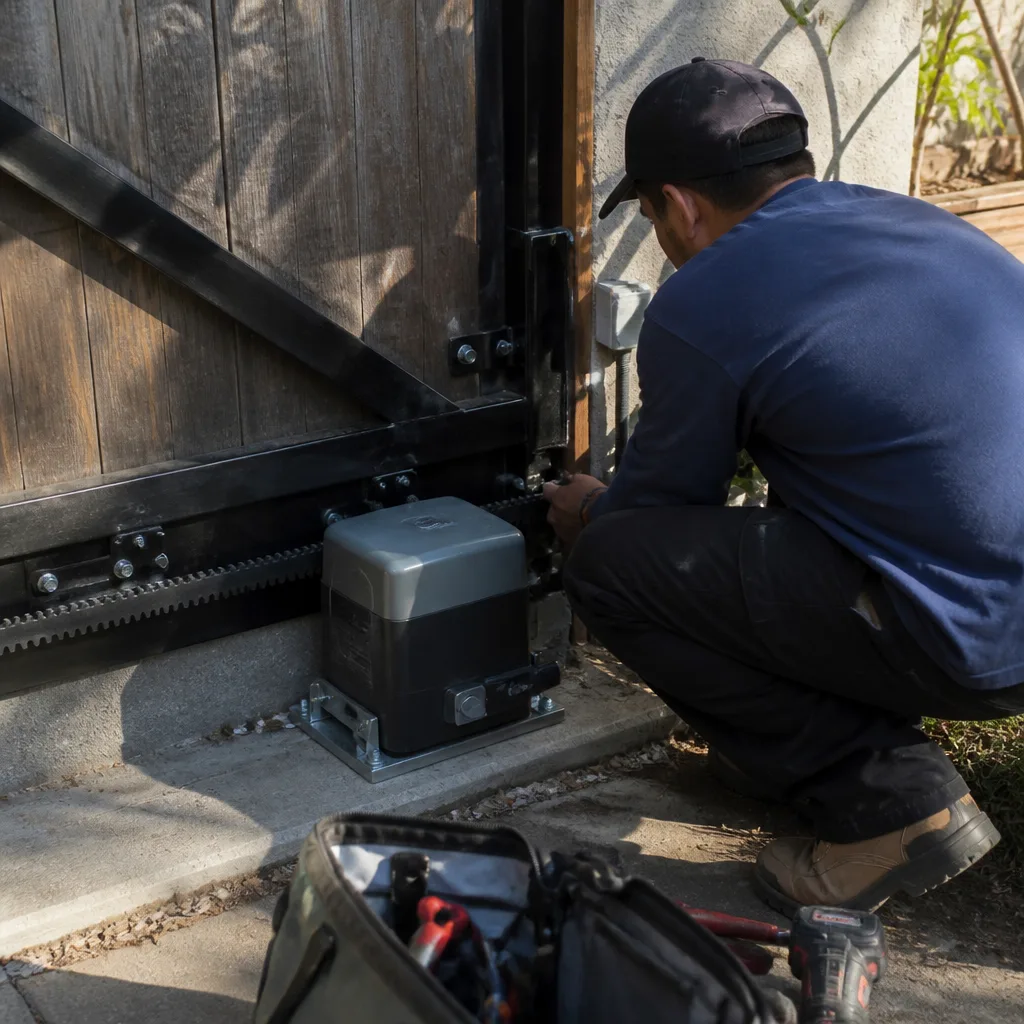
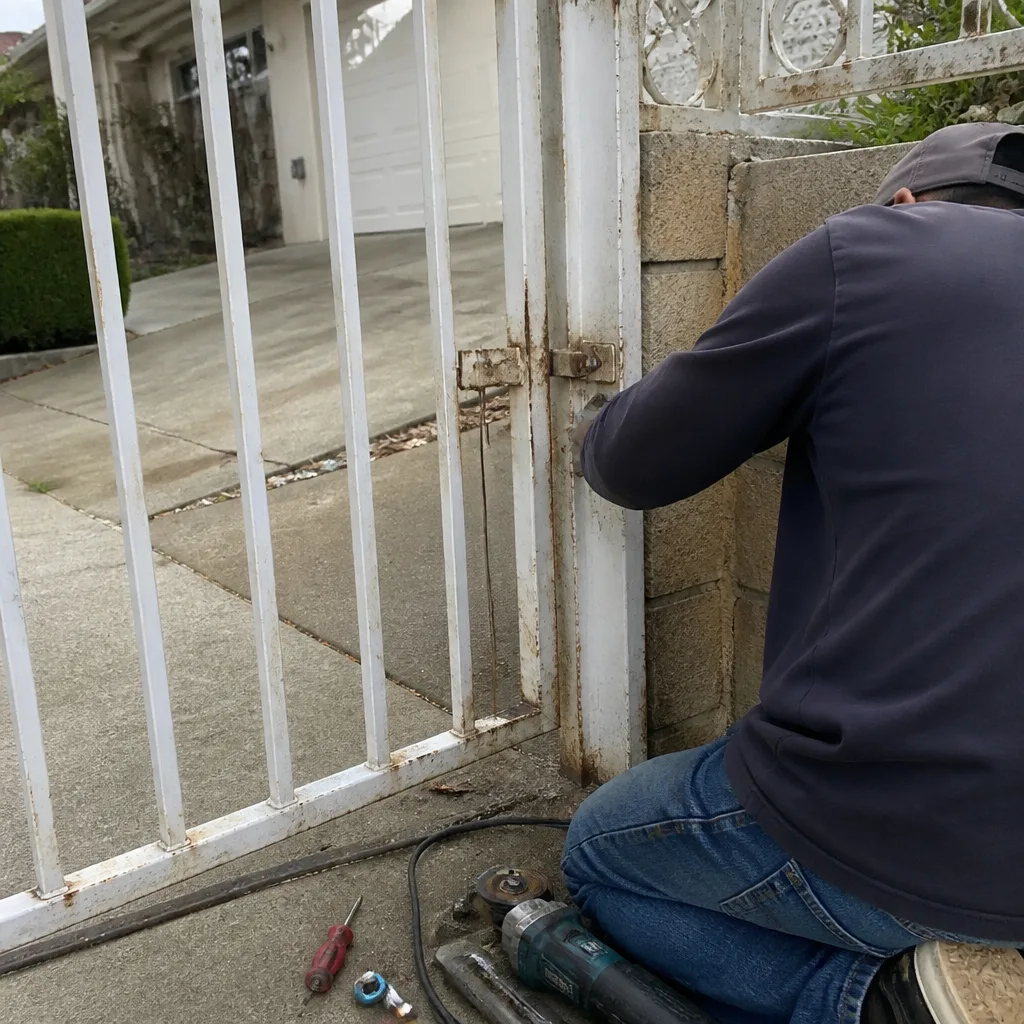
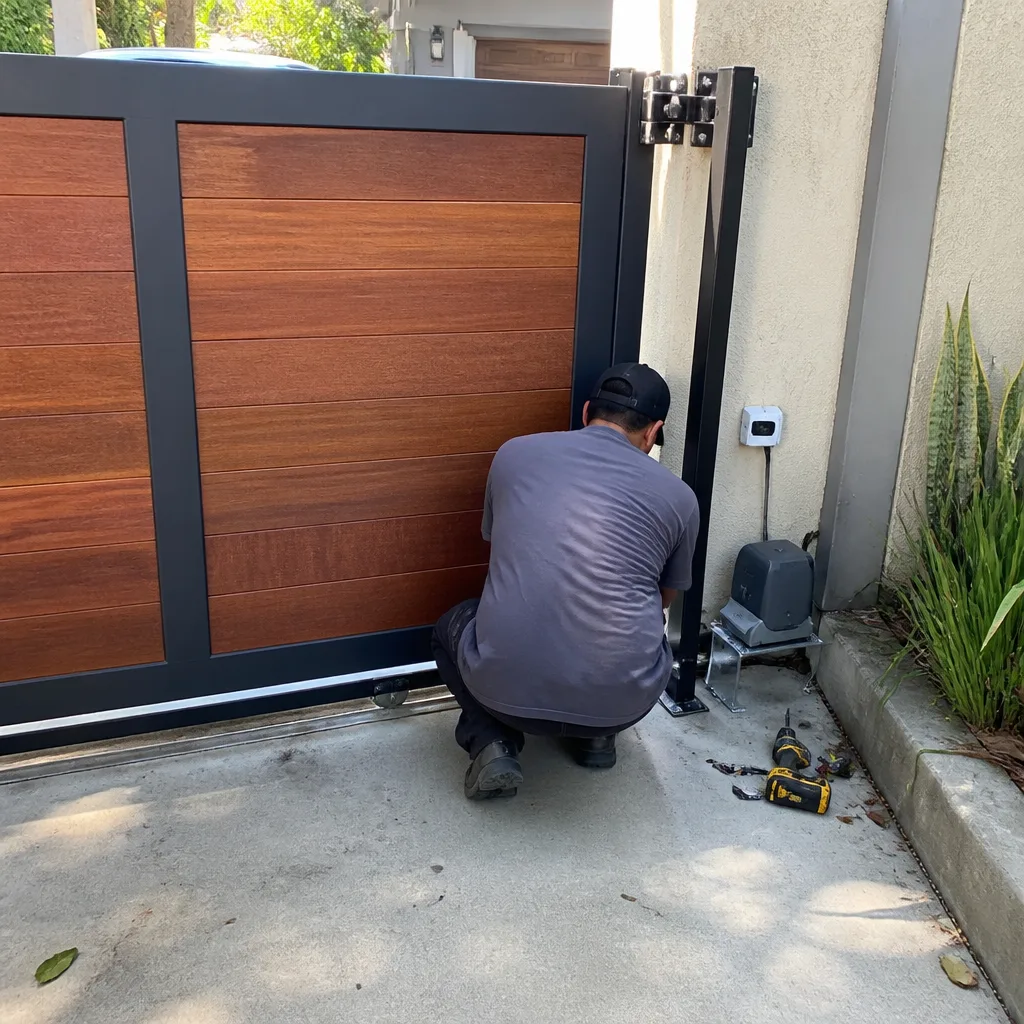
See the difference
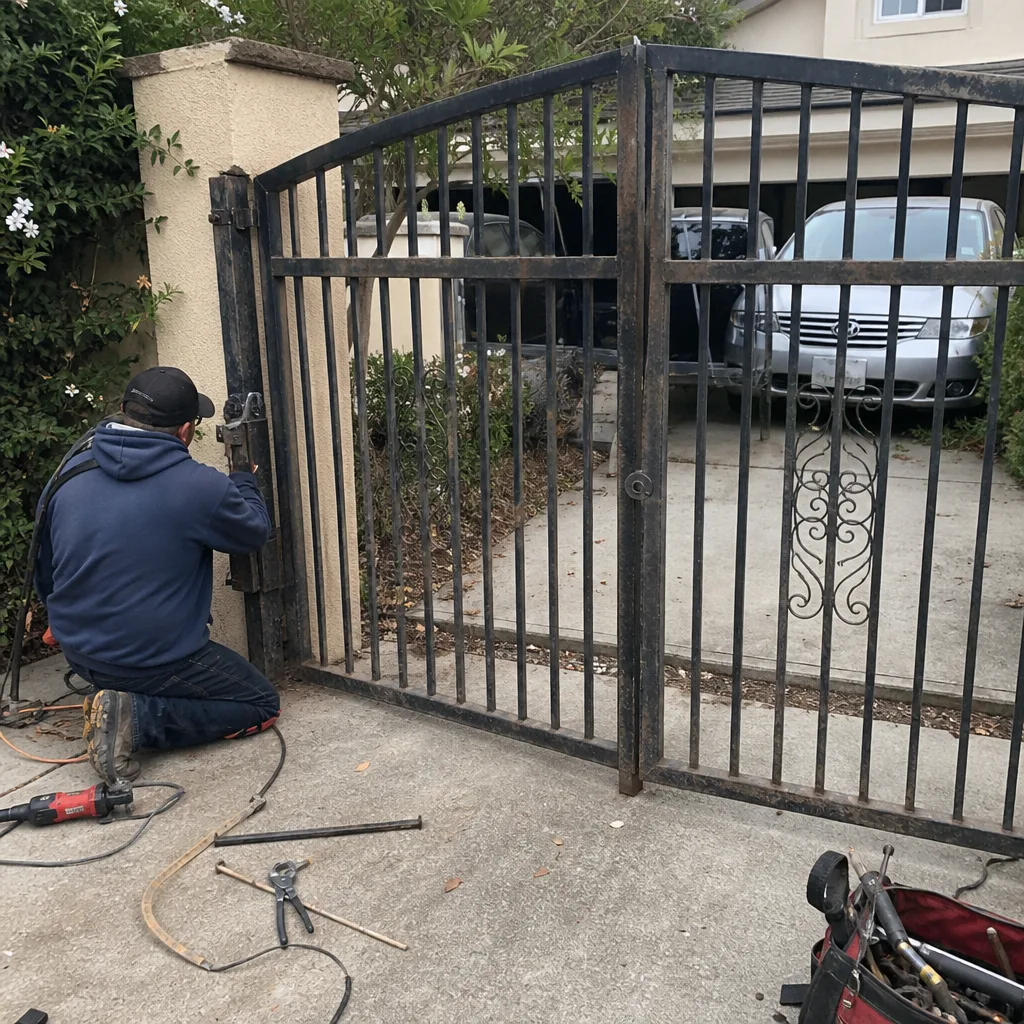 Before
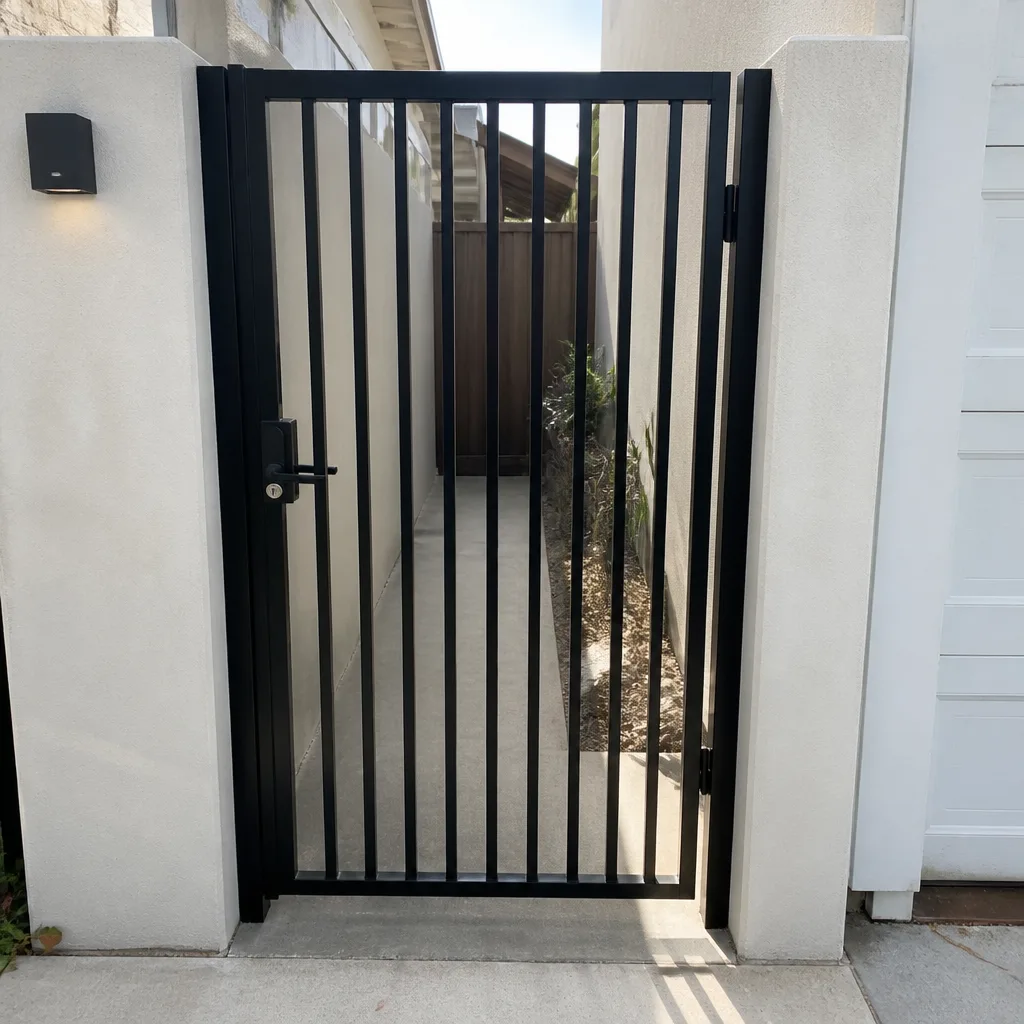 After
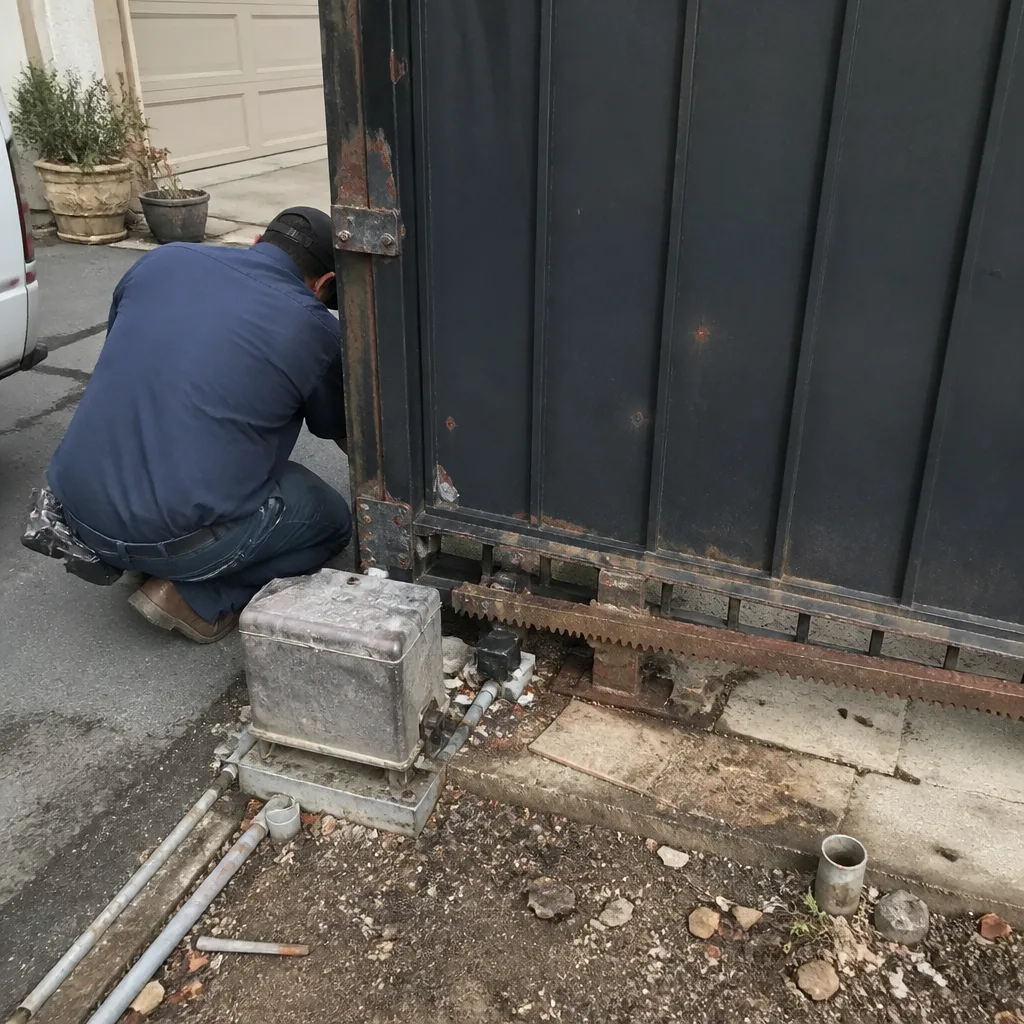 Before
 After
 Before
 After
When to Call a Professional
Gate permitting and code compliance is not a DIY field, and the margin for error is measured in liability, not satisfaction. Call a professional when your gate operator needs replacement, when you’re adding an automated operator to a manual gate, when an inspector has flagged a compliance issue, or when you’re buying a home with an automated gate and don’t know its history. A gate that hasn’t been inspected or upgraded since before 2018 deserves a compliance review. Electric Gate Repair in Bay Terraces covers brand-specific work on Linear, BFT, Viking, and Ghost Controls systems, and our technicians can assess the compliance status of any automated gate. Gate Repair Bay Terraces home offers free estimates in Bay Terraces and the surrounding San Diego communities. Call (877) 573-0794 to schedule a gate compliance review or a repair estimate, and we’ll tell you exactly what your specific gate needs to meet California’s current standards.
Frequently Asked Questions
You need a permit if the repair involves structural changes to the gate frame or posts, alters the gate’s path of travel, or adds new electrical wiring to an operator. Like-for-like component replacements, such as swapping a control board, replacing a hinge, or installing a new safety sensor on an existing system, are permit-exempt maintenance. If you’re unsure, the San Diego County Building Division can classify your specific repair before you start. Call (877) 573-0794 and we’ll help you determine which category your repair falls into, and we’ll pull any required permits if you hire us for the work.
UL 325 is the national safety standard for automated gate operators, adopted into California law, that requires every automated gate to have entrapment protection devices that detect obstructions and reverse the gate before it can injure someone. It requires monitored primary protection (photo eyes or edge sensors) plus a reversing mechanism, and it applies to every automated gate in California regardless of when it was installed. A gate that fails UL 325 is a civil liability exposure even with a valid building permit. We can assess your current gate against the standard during any service call.
No, not in California. The 2018 gate safety update requires that any operator replacement on an existing automated gate brings the entire system into current UL 325 compliance. That means your existing safety sensors, photo eyes, and warning placards must meet current standards before the new operator can be considered compliant. Replacing the operator without upgrading the sensors leaves you legally responsible for a non-compliant system. Call (877) 573-0794 for an exact breakdown of what your specific gate will need before we replace any operator.
If your gate fails, the inspector will issue a correction notice listing the specific deficiencies, and you’ll need to fix them and schedule a re-inspection, which costs $95 to $185. Common failure points are missing warning placards, force settings that exceed the 40-pound threshold, photo eyes that don’t trigger the reversal, and unpermitted electrical work discovered during the inspection. Correcting the deficiencies before the first inspection is always cheaper. We can prepare your gate for inspection before the inspector arrives.
Yes, if your home is in an HOA-governed community in the Bay Terraces or Paradise Hills area, and the gate is visible from the street or a common area, the HOA has independent design review authority over the project. County permitting does not override HOA approval, and an HOA can force removal of a non-approved gate even after the county signs off. File the HOA design review application before you file for the county permit. This sequence prevents costly rework.
A residential gate permit in San Diego County typically costs between $180 and $420, and an electrical permit for new operator wiring adds another $150 to $310. Compliance upgrades such as edge sensors, photo eyes, and warning placards range from $350 to $900 depending on the gate size and brand. Exact fees depend on your project’s scope. Estimates are free, and we quote the full permit and compliance cost before any work starts. Call (877) 573-0794 for a written estimate.
The Bottom Line
California’s gate permitting and UL 325 compliance rules are specific, enforceable, and centered on preventing entrapment injuries that no homeowner wants on their conscience or their insurance record. A gate that looks and works fine can be out of compliance, and the liability sits with the homeowner, not the installer. The 2018 law changed the game for existing gates by triggering compliance upgrades on operator replacements, and San Diego County inspectors check entrapment protection, force settings, and structural anchoring on every permitted project. We’re here to help you navigate from first call to final inspection with the gate-specific expertise that generalist contractors can’t offer, and you’ll find more guides & resources on our blog. Call (877) 573-0794 for a free estimate on your gate repair, compliance review, or new gate installation in Bay Terraces.
Written by the team at Gate Repair Bay Terraces, serving Bay Terraces since 2018.