
Last updated November 2, 2026
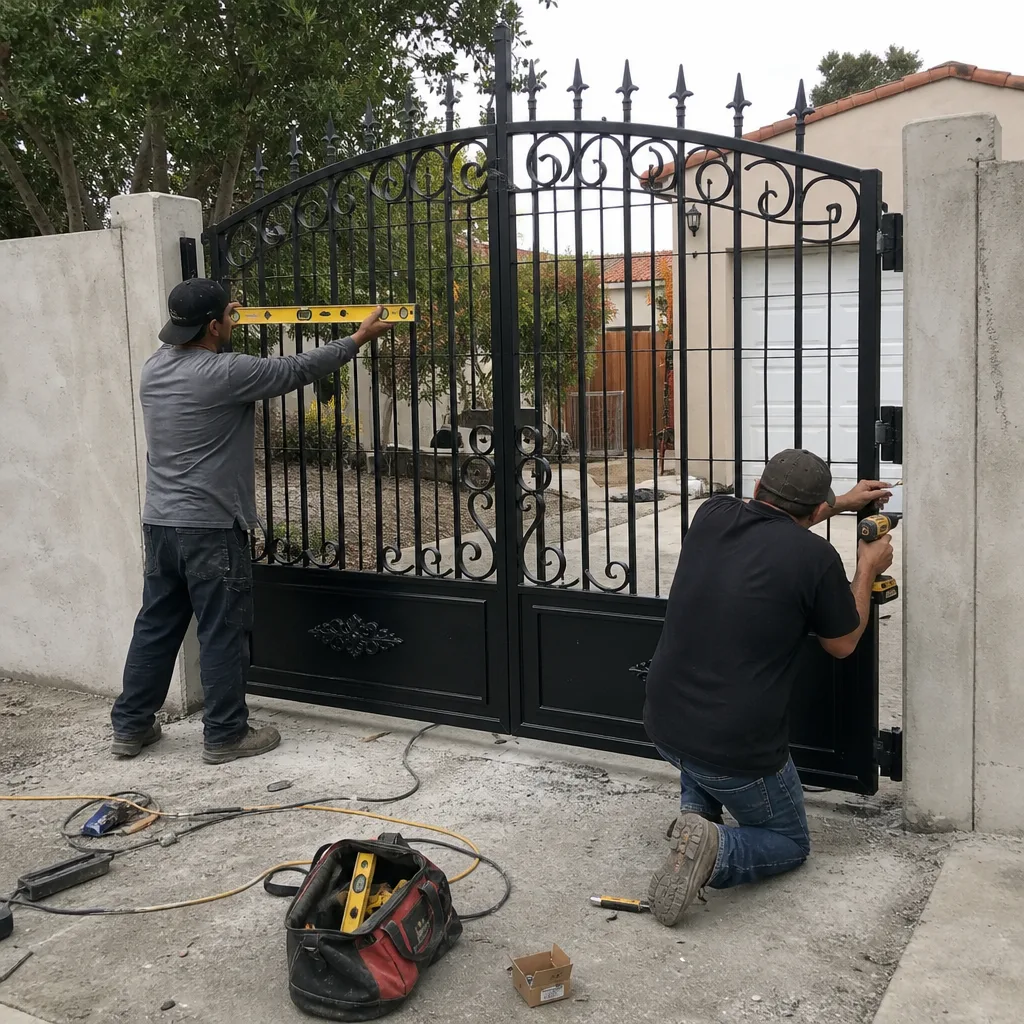
 Wrought iron
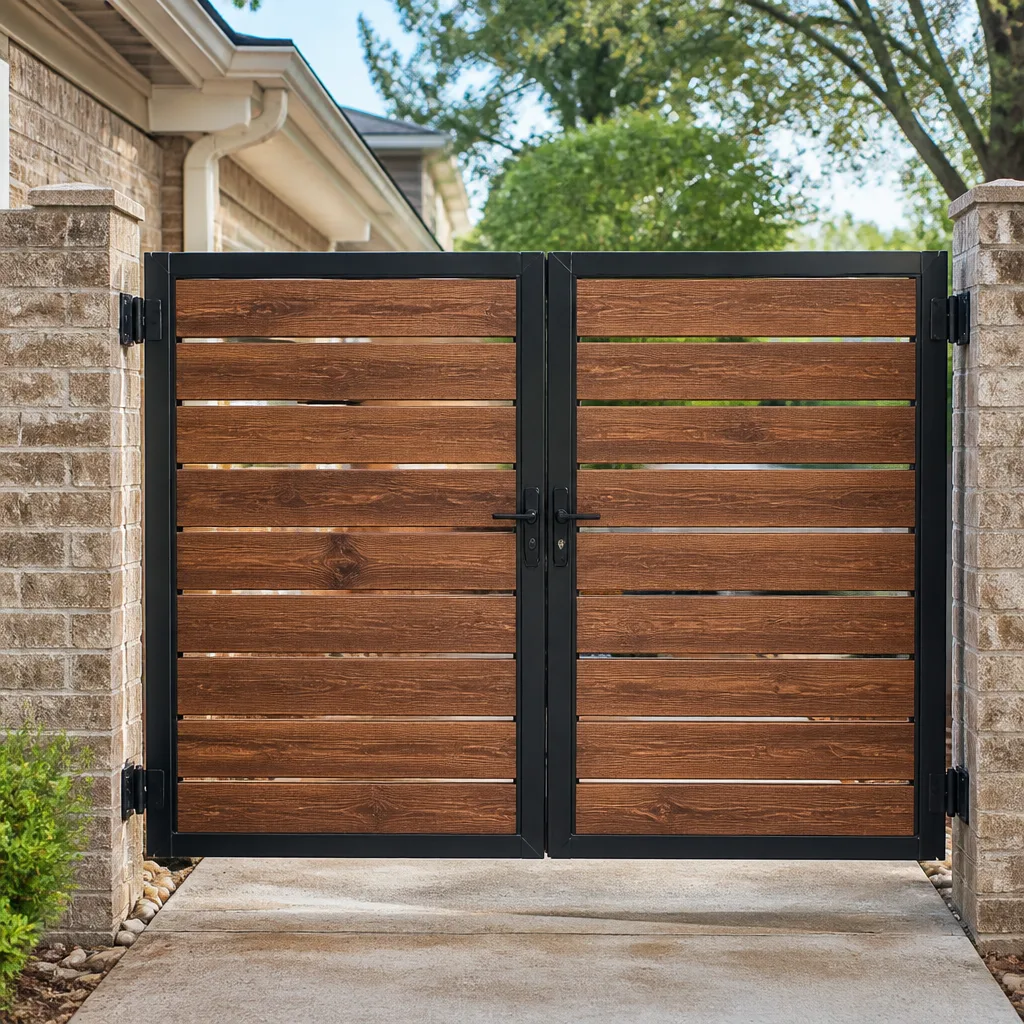 Wood & steel frame
 Farm & ranch
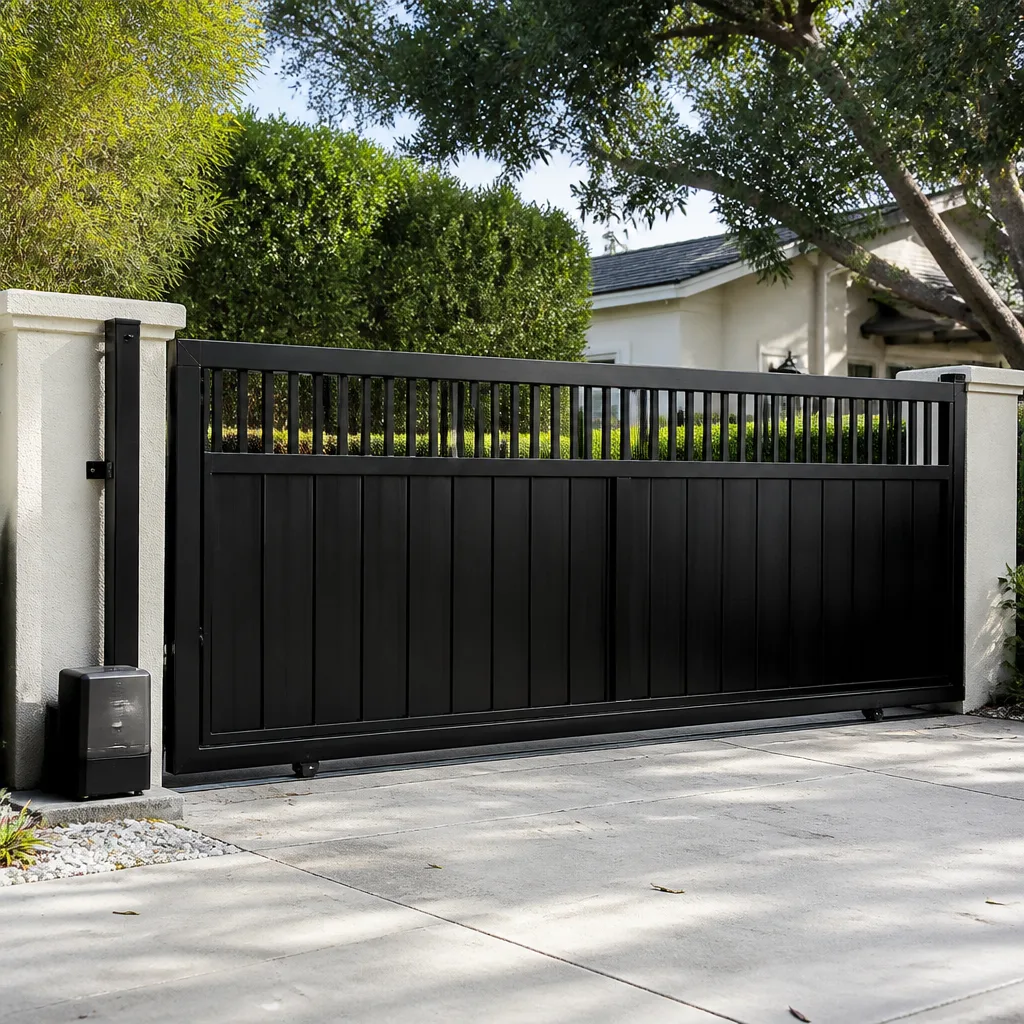 Sliding driveway gates
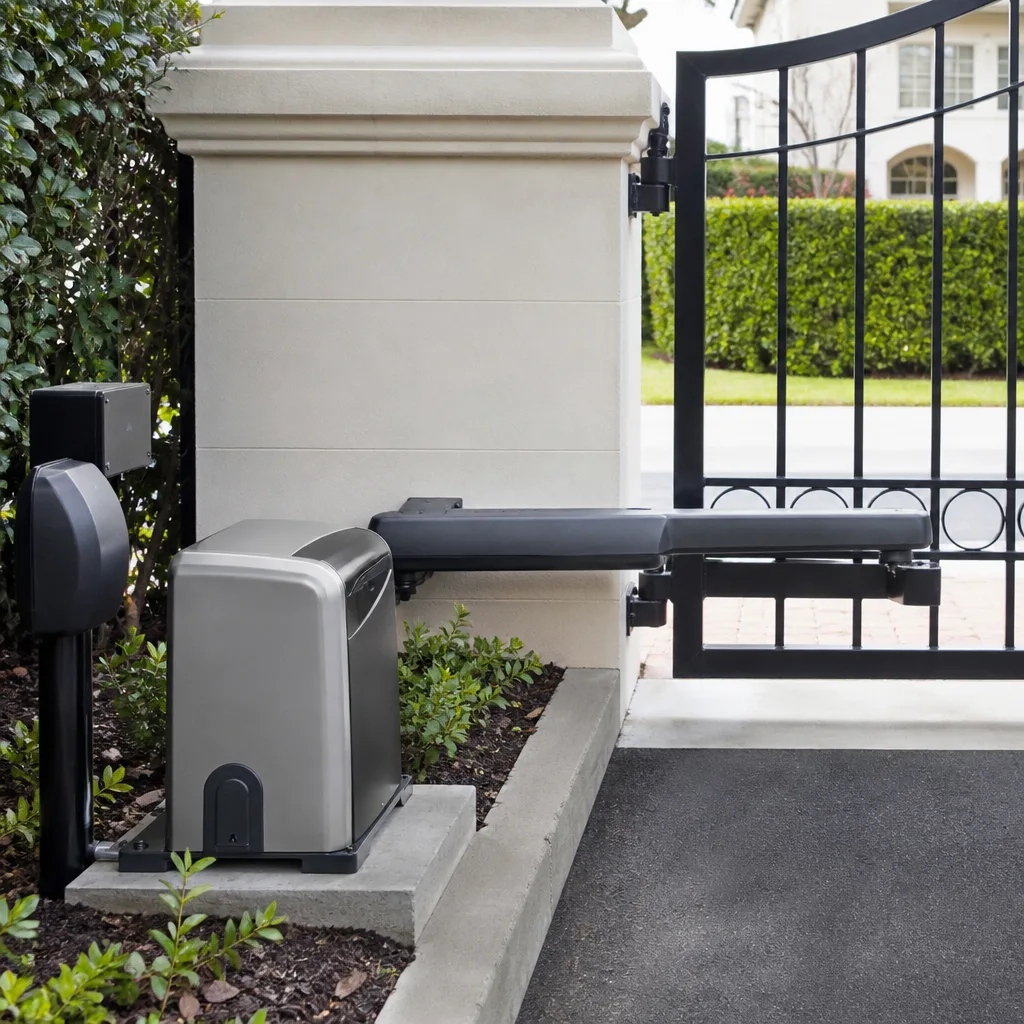 LiftMaster operators
Free on-site gate assessment - hinges, posts, and your LiftMaster or Nice gate operator checked before anything is quoted
The assessment is free and the quote is the invoice.
Get your free estimateGate Repair Warning Signs: A Bay Terraces Homeowner’s Reference Guide
Most Bay Terraces gates don’t fail suddenly. They degrade in stages, announcing each step with a specific sound, a change in speed, or a visual cue that’s easy to dismiss. The problem is that homeowners hear a click or see a slow cycle and file it under “old gate doing old gate things.” By the time the gate stops moving entirely, the repair bill is often three times what it would have been weeks earlier. This guide maps each warning sign to the component causing it, so you can spot a failing capacitor before it takes out your control board, and describe the symptom to a technician in language that cuts diagnostic time in half. We’ve built this reference from years of our Gate Repair services across Bay Terraces, and it reflects the failure patterns we actually see in this climate.
Quick Answer
The most common gate repair warning signs in Bay Terraces are: grinding or clicking sounds during operation, a gate that moves slower than it did a month ago, remote controls that work inconsistently, hesitation before movement starts, mid-cycle reversals, and visible rust or hairline cracks at hinge and weld points. Any of these signals indicates a component under stress, and addressing it now typically means a $150 to $400 repair rather than a $1,500 to $4,000 full operator or gate replacement later. If your gate exhibits two or more of these signs simultaneously, the failure is compounding and you should schedule service within the week.
Styles & brands we work with
- Wrought iron
- Wood & steel frame
- Farm & ranch
- Sliding driveway gates
- LiftMaster operators
Table of Contents
- What Your Gate Is Telling You: A Sound-to-Source Map
- Behavioral Flags in Electric Gate Operators
- Visual Warning Signs You Walk Past Every Day
- Nuisance Faults vs. Safety-Critical Faults
- How to Document Warning Signs Before You Call
- Brand-Specific Failure Patterns We See in Bay Terraces
- Common Mistakes to Avoid
- When to Call a Professional
- Frequently Asked Questions
What Your Gate Is Telling You: A Sound-to-Source Map
Sounds are the most reliable diagnostic tool your gate gives you, and the most ignored. Every mechanical system produces a baseline sound when healthy. When that sound changes, something specific has changed with it. Here’s what we listen for during a service call in Bay Terraces, and what each pattern usually means.
A low grinding or metallic scraping sound from a swing gate almost always points to the hinge line. Over years, rust and debris work their way into the hinge barrel, scoring the pin and wearing the bearing surfaces. On a sliding gate, the same sound comes from either the track rollers or the guide wheels running on the track. A roller with a flat spot or a seized bearing doesn’t roll, it drags. In coastal-adjacent areas like Bay Terraces, salt air accelerates this process, and we recommend checking rollers and hinges twice a year.
A rapid clicking when you press the remote is electrical. The click you hear is the relay inside the control board trying to engage. If the operator motor doesn’t respond after the click, the relay is firing but power isn’t reaching the motor, which typically means a blown capacitor, a failing transformer, or burned contacts on the relay itself. If the clicking comes from the operator repeatedly while the gate barely moves, that’s the overload protector cycling, and it means the motor is pulling more current than it was designed to draw.
A buzzing or humming from the operator with no gate movement points to the capacitor. The capacitor provides the initial jolt of power that starts the motor turning. When it fails, the motor can’t start, but it still receives voltage, so it hums. Left in this state, the humming motor overheats within minutes and can burn out entirely. If you hear this, cut power to the operator at the breaker and call a technician. A new capacitor is a quick fix; a new motor is a significant replacement cost.
What you won’t hear on a healthy gate: rhythmic thumping, any sound that repeats in time with the gate’s travel, or a change in pitch mid-cycle. A healthy gate sounds consistent from start to stop. When the sound changes as the gate moves, something is binding at that point in the travel.
Behavioral Flags in Electric Gate Operators
Electric gate operators are built to move a gate at a consistent speed, stop at consistent positions, and respond to remote commands within a predictable window. When any of those behaviors drifts, the operator is signaling a fault condition. Here are the behavioral flags that matter, and what each indicates about the failing component.
Slow cycle speed. If your gate takes noticeably longer to open or close than it did six months ago, that’s not normal aging. In our experience across Bay Terraces, a slow-moving gate usually means one of three things: the capacitor is degrading and delivering reduced starting power, the motor is running hot from degraded windings, or the gate itself is binding and forcing the motor to work against resistance. The fix ranges from a quick capacitor replacement to a mechanical adjustment on the gate. The diagnosis matters because treating it as “just a slow gate” is how you end up with a motor replacement.
Inconsistent remote range. You used to trigger the gate from halfway down the block. Now you have to pull up to the keypad. This is a receiver issue, not a remote battery issue, if it happens across multiple remotes. On brands like Linear and Ghost Controls, the receiver board’s sensitivity often drifts as components age. On BFT and Viking operators, we see antenna corrosion from humidity. In Bay Terraces, where fog and marine air are a factor, antenna and receiver contacts degrade faster than inland markets. A technician can test the receiver’s actual output and either tune it or replace the receiver module, which is a fraction of the cost of a full operator swap.
Mid-cycle reversals. The gate starts to close, then reverses as if it hit something, except nothing is there. This is usually the safety edge sensor or the photocell misreporting an obstruction. On some systems, it’s the force sensitivity setting drifting out of calibration as temperatures change. Mid-cycle reversal in an electric gate is a symptom of a safety system giving false positives. The worst outcome isn’t that the gate won’t close, it’s that a homeowner disables the safety system to “fix” it, which creates a safety hazard. We don’t recommend adjusting force settings without testing the complete safety circuit first.
Hesitation before movement. You press the remote, and the gate waits two seconds before responding. This is the delay built into the control board for soft-start, but on most systems it should be under one second. A longer pause than you remember means the control board relay is sticking or the loop detector is processing slowly. Both degrade further with use. In our experience, hesitation is the warning sign most likely to be dismissed as the gate “warming up.” It isn’t warming up. It’s indicating a fault that will become a full stop.
Visual Warning Signs You Walk Past Every Day
Homeowners look at their gates daily but rarely inspect them. The visual cues below are the ones we find during service calls in Bay Terraces that owners had been walking past for months. Each one maps to a specific mechanical stress point.
Hairline weld cracks at hinge points. On steel and iron gates, the weld where the hinge plate meets the gate frame is the highest-stress point on the entire structure. A hairline crack there, often visible as a fine dark line or a ring of surface rust around the weld, means the gate’s weight is flexing the joint every time it moves. Left alone, the crack propagates. What starts as a grind-and-re-weld job becomes a gate that sags, then a hinge that tears free. We inspect for these cracks as part of every Gate Repair in Bay Terraces service call, and we recommend homeowners look for them every few months.
Track debris patterns on sliding gates. A sliding gate sits on a track, and the track tells you exactly how the gate is wearing. Look at the debris pattern. If you see a consistent pile of metal-colored dust or small flakes along one section of the track, that’s bearing material from a failing roller. If the debris is concentrated near the gate’s closed position, the gate is coasting into the stop at speed, which means the soft-stop function isn’t working. If the wheels leave clean, polished grooves in a section of track, something is binding and the gate is dragging. None of these are normal.
Oxidation staging on hardware. Rust is rarely uniform. It stages. The first stage is surface oxidation, a fine orange-brown dusting you can wipe off. The second stage is pitting, where the rust has begun to eat into the metal. The third stage is scaling, where layers of the metal flake off and the fastener or bracket loses structural integrity. If you see pitting on hinge bolts, operator mounting brackets, or safety edge housings, the component is compromised. In Bay Terraces, within a few miles of coastal influence, oxidation staging happens faster than inland, and we see gates with fully seized hardware within a decade without intervention. A hinge bolt that snaps mid-cycle doesn’t just stop the gate, it can drop the gate leaf onto a car or a person.
Gate sag or lean. A swing gate that used to sit level and now droops toward the latch is telling you the hinge bearings are worn. A sliding gate that leans into the track is telling you the guide rollers are failing. Both are structural warnings that transfer stress back into the operator, which then works harder and fails earlier.
Nuisance Faults vs. Safety-Critical Faults
Not every warning sign is an emergency. But some are, and knowing the difference can prevent an injury. Here’s the distinction we use when triaging service calls in Bay Terraces.
Nuisance faults are conditions that impair convenience without creating a safety hazard. A remote that works only at close range is a nuisance. An intermittent “gate open” indicator on the keypad is a nuisance. A gate that runs slightly slower than normal is a nuisance, though it’s a nuisance that will become a mechanical problem if ignored. Nuisance faults can usually wait a few days for a scheduled appointment, though we recommend documenting them when they start so you can describe them accurately later.
Safety-critical faults require the gate to be taken offline immediately. These include: a gate that reverses or continues closing after it has contacted an object or person, a gate that moves without any command, a gate that stays open or closed when commanded to do the opposite (indicating a control board fault that could command unexpected movement), or any condition where the safety sensors are bypassed, disabled, or being ignored by the operator. These are the fault conditions that make automatic gates dangerous.
The key consideration: if the gate’s failure mode could result in the gate moving unpredictably or failing to stop when it should, that’s a safety-critical fault. Cut power to the operator, secure the gate in a safe position, and call a technician who can test the full safety circuit. A control board that behaves erratically is not a mechanical problem; it’s a control problem that gates do not self-correct.
How to Document Warning Signs Before You Call
The single biggest time-saver in gate diagnosis is an accurate symptom report from the owner. When a homeowner says “the gate’s acting weird,” our technician arrives without a lead to follow. When a homeowner says “the gate hesitates two seconds, then grinds in the last quarter of travel, and the remote only works from ten feet away,” that’s a diagnosis already half done. Here’s how to document what you’re experiencing.
- Note the exact sound. Record a ten-second video with your phone during operation. We don’t need to see the video; the audio alone captures the frequency and rhythm of the noise. Grinding sounds different from clicking, and both sound different from buzzing. The right word is better than “weird noise.”
- Note the timing. Does the sound happen during the entire cycle, or only at certain points? Only when opening, only when closing, or both? At startup, mid-cycle, or at the end of travel? Timing maps directly to which component is under load at that moment.
- Note the speed change. Compare the gate’s current cycle time to what it was. If you’ve never timed it, time it from fully closed to fully open once now. A BFT operator on a typical Bay Terraces driveway swing should complete a full cycle in 12 to 20 seconds depending on leaf length. If you’re at 35 seconds, that’s a data point.
- Note the conditions. Does the symptom happen every time, or only in certain weather? Some faults appear only in heat, when expansion increases binding. Some appear only in damp conditions, when corroded contacts bridge. In Bay Terraces, where mornings are often damp and afternoons are dry, symptom timing relative to weather is frequently diagnostic.
- Write down any error codes. Most modern operators flash a diagnostic LED or display a code on the keypad. Read the manual, or take a photo of the flashing pattern. On brands like BFT and Viking, the blink sequence maps to a specific fault code that tells us exactly what the operator thinks is wrong.
A good symptom report cuts diagnostic time in half. It also means the technician arrives with the right parts on the truck, which means one visit instead of two.
Brand-Specific Failure Patterns We See in Bay Terraces
Different gate operators fail differently. Brand-specific knowledge isn’t a marketing line, it’s a diagnostic advantage. Here’s what we observe across the brands we service most often in Bay Terraces, and what owners of those systems should watch for.
BFT operators tend to fail through capacitor degradation first. We see them in older Bay Terraces installations, many working reliably well past their expected service life. The tell is a gate that starts slower than it did, especially in cold mornings. BFT control boards are generally robust; the capacitors are the wear item. If your BFT gate struggles to start but runs fine once moving, that’s a capacitor fading.
Linear operators run into receiver and antenna corrosion in coastal-adjacent areas like Bay Terraces. The operator’s mechanical components are built for long service, but the receiver isn’t always as well sealed as the motor. The symptom is the one we described earlier: remote range that shrinks over weeks or months. A receiver module replacement restores range without touching the operator, and that’s the repair we recommend before assuming the whole board is bad.
Viking operators are built for commercial and heavy residential use, and their weak point in our experience is the limit switch assembly. Limit switches tell the operator where the gate should stop. When they drift out of alignment, the gate overshoots, stops short, or reverses at the wrong point. Like all brands with external limit switches, Viking systems need periodic limit calibration, and in Bay Terraces, we find most residential Viking operators have never been recalibrated since installation.
Ghost Controls systems are popular in DIY and light residential installs, and their failure mode follows the installation as much as the hardware. Ghost Controls operators fail through battery mismatch on solar-supplemented systems and through hinge binding when the gate is slightly too heavy for the actuator’s rating. We see more mid-cycle reversals on Ghost Controls systems than any other brand, usually because the force threshold gets dialed up by the owner to compensate for a binding gate instead of the binding being addressed at the hinge. The best support for a Ghost Controls gate is correct hinge maintenance plus an honest assessment of whether the operator is sized for the gate.
This is not the full list of brands we service, but it maps the brands we mention most often, and it illustrates why knowing which operator is on the gate changes the diagnosis. A technician who knows your system is looking at the right component first.
If you’re unsure which operator you have, the model plate is usually on the side of the operator housing or inside the control box. Write down the brand and model before you call anyone. It’s the fastest way we can serve you, and it’s information we use to bring the right parts on the first visit. For a full overview of what our Electric Gate Repair in Bay Terraces service covers and the systems we work on, that page has the details.
Common Mistakes to Avoid
Once a gate starts showing warning signs, the owner’s next actions determine whether the repair is simple or compound. These are the mistakes we see regularly in Bay Terraces, and what to do instead.
- Lubricating without cleaning first. Adding grease or spray lubricant over dirt, rust, and old lubricant creates an abrasive paste that accelerates hinge and roller wear. If you lubricate, clean the surface first, then lubricate sparingly. In Bay Terraces, where wind-driven dust mixes with coastal moisture, lubrication over dirt is worse than no lubrication at all.
- Adjusting force settings to “fix” a binding gate. When a gate binds and the operator stops or reverses, raising the force limit overrides the safety logic. The gate moves, but the binding is still there, and now the operator is pushing harder through it. The honest fix is to address the binding at the hinge or roller, not to tell the operator to ignore it.
- Ignoring a slow remote because “the keypad still works.” A shrinking remote range is the receiver failing, not the remote. Waiting until the remote stops working entirely often means the receiver board has failed completely, and receiver replacement is more expensive than early repair or tuning.
- Painting over rust instead of treating it. Paint seals in moisture and corrosion, and the rust continues underneath. Surface rust on a gate in Bay Terraces needs to be removed, treated, primed, and then painted. We see gates where repeated painting has hidden frame corrosion until the metal is too thin to weld.
- Running the gate after a safety sensor starts acting intermittently. An intermittent safety fault is the system trying to tell you the safety circuit is failing. Continuing to operate the gate, especially with the safety function compromised, creates the kind of unpredictable behavior that injures people.
- Guessing at the problem and replacing parts blindly. We see owners replace capacitors, remotes, and batteries on guesses, then call us when the problem persists. The money spent on the wrong parts often exceeds the cost of the initial service call. Cheap guesses add up.
- Delaying because “it still opens and closes.” Every component failure is cheaper to fix the earlier you catch it. A gate that still operates in some degraded condition is a gate showing you exactly where the next full failure will be. Delaying turns a component repair into a system replacement.
When to Call a Professional
You should call a gate technician when any warning sign becomes consistent, meaning it happens on most cycles, not just occasionally. An intermittent symptom is worth documenting. A consistent one is worth a service visit. Call immediately if your gate moves unpredictably, if the safety sensors are bypassed or malfunctioning, if the gate has contacted a vehicle or person while moving, or if you see structural damage at hinge points or weld joints. See our guide on How to Hire a Gate Repair Contractor in Bay Terraces: A Step-by-Step Guide for what to ask when booking.
For everything else, from slow cycles to brush-free grinding, call when the symptom first appears. Gate Repair Bay Terraces offers free estimates in Bay Terraces for repair and replacement work, and our gate-only focus means every service call is handled by a technician who works on gates, operators, and access systems all day, every day. We service nine brands including BFT, Linear, Viking, and Ghost Controls, so if you know your operator’s make and model, include that when you call (877) 573-0794.
Frequently Asked Questions
Gate repair in Bay Terraces typically runs $150 to $400 for component-level fixes like capacitors, limit switches, receiver modules, and hinge adjustments. Full operator replacements range from $900 to $3,500 depending on brand and gate type, and complete gate installation work starts around $2,000 and goes up from there based on materials and automation complexity. Your exact quote depends on what your gate is telling us during diagnosis, and the price is always agreed before we start any work. Call (877) 573-0794 for a free estimate.
A hesitation between command and movement usually indicates a sticking relay on the control board or a degrading loop detector, not a gate “warming up.” The delay will typically lengthen over weeks or months until the gate stops responding entirely. This fault is cheap to fix when caught early, so if you notice a consistent hesitation, schedule service before it becomes a full control board failure.
Surface rust can be treated, sealed, and painted if the underlying metal is still structurally sound. Pitted or scaled rust on hinges, brackets, or frame sections requires welding or component replacement. The decision depends on how far the oxidation has progressed, which is why catching it early matters. We assess rust damage as part of every Gate Installation in Bay Terraces and repair estimate.
We service nine major gate and operator brands: LiftMaster, FAAC, BFT, Linear, Viking, Ghost Controls, DoorKing, Elite, and Mighty Mule. That range covers residential entry-level systems through commercial-grade equipment, and our technicians know the specific failure patterns and parts for each brand. If you know your operator’s brand and model, tell us when you call, and we’ll bring the right parts on the first visit.
Electrical problems usually announce themselves with clicking, buzzing, humming, or intermittent remote behavior. Mechanical problems announce themselves with grinding, scraping, sagging, or visible wear at hinges and rollers. Documenting the exact sound and when it occurs in the cycle is the fastest way to separate the two, and that’s information we’ll ask for when you call about Gate Repair Bay Terraces home service.
If your gate is stuck and you’re blocked in or out, emergency gate service in Bay Terraces is available by calling (877) 573-0794 directly, and we’ll work to get you moving the same day. For gates that still operate but are showing warning signs, a scheduled appointment within the week is usually sufficient, and the earlier you book, the smaller the repair tends to be.
The Bottom Line
Your gate is constantly telling you what’s wrong with it. The grinding sound maps to a specific hinge or roller. The hesitation maps to a control board or loop detector. The slow cycle maps to a capacitor or a binding gate. None of these signals are normal aging, and none of them fix themselves. Bay Terraces homeowners who document the sound, the timing, and the conditions of their gate’s symptoms, then call with that information, get faster diagnosis and smaller repair bills. The gap between a $200 component replacement and a $2,000 system replacement is usually a few weeks of ignored warning signs. Listen to the gate. It’s telling you exactly what it needs. For a diagnosis, a quote, or just a second opinion on a sound you’re not sure about, call Gate Repair Bay Terraces at (877) 573-0794. Estimates are free. For more guides & resources, visit our blog.
Written by the team at Gate Repair Bay Terraces, serving Bay Terraces since 2018.
See the difference
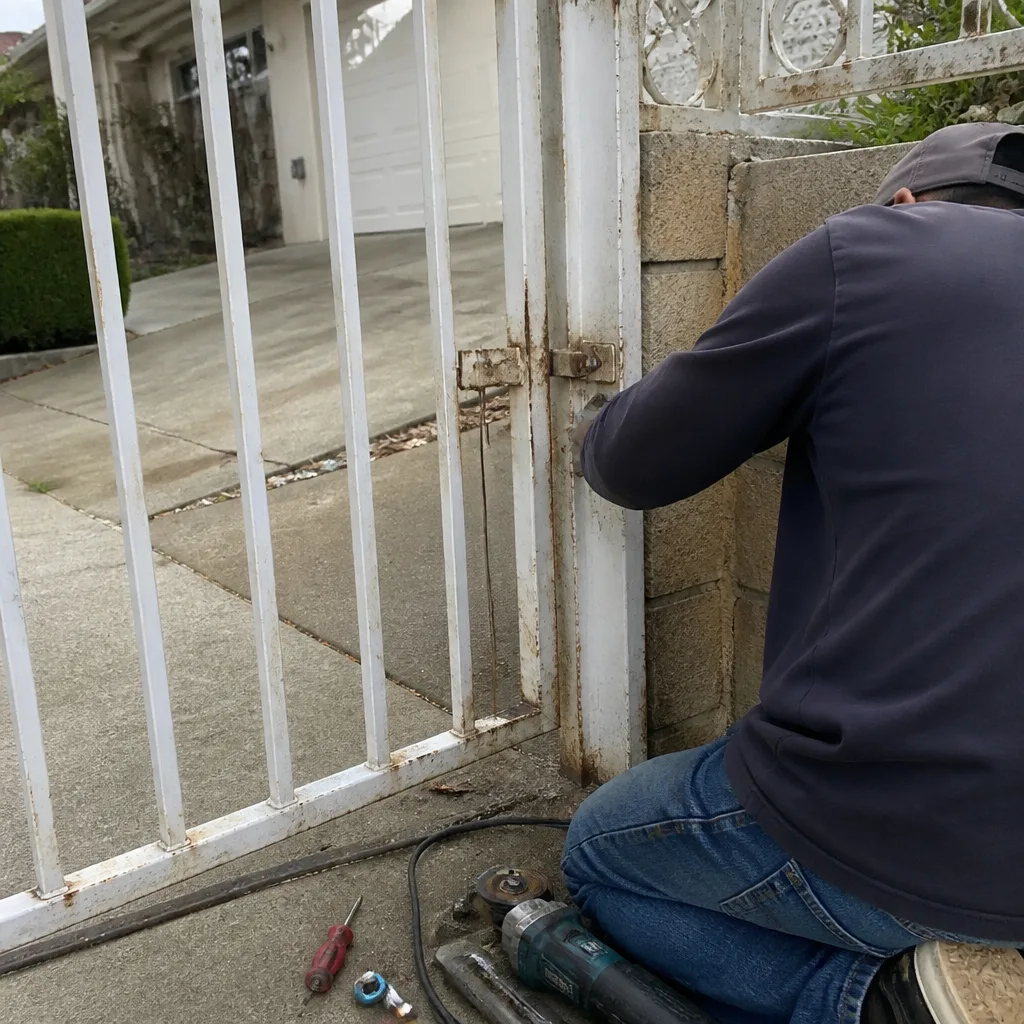
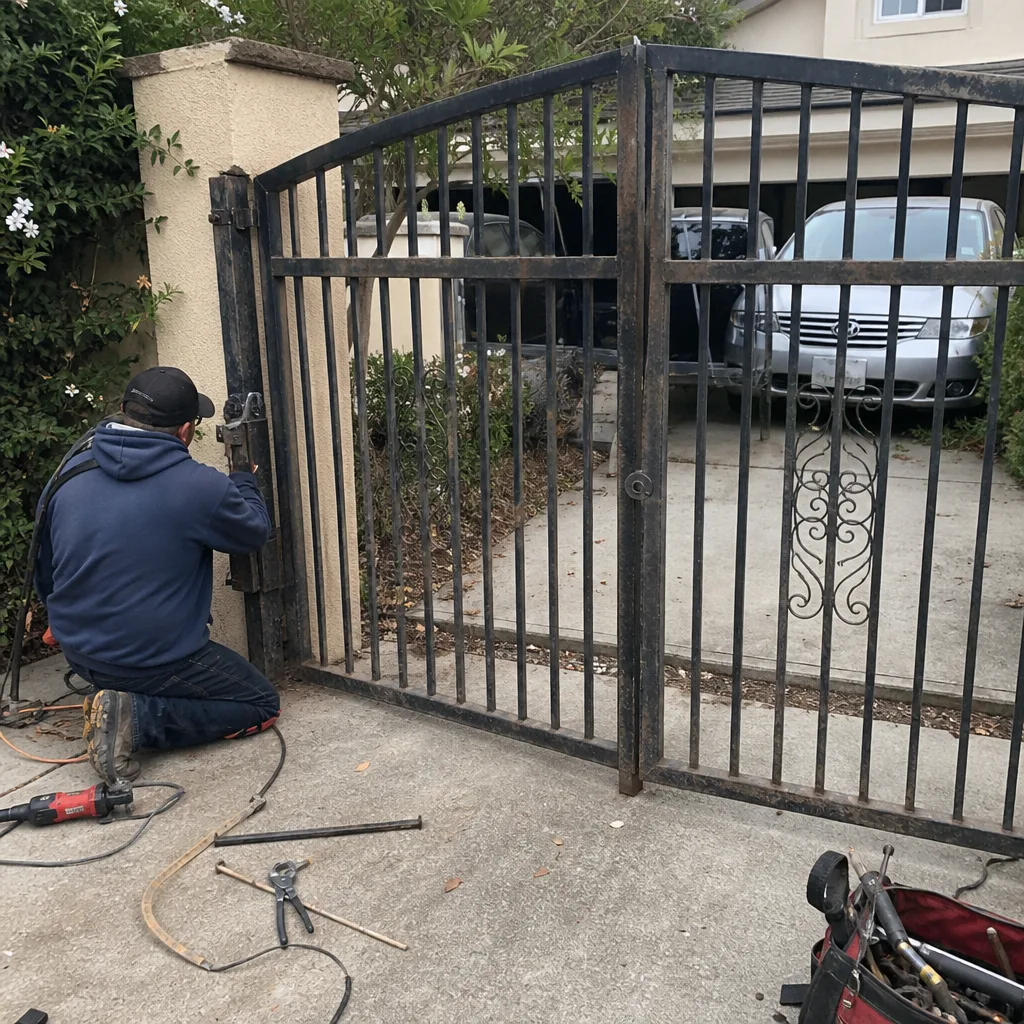 Before
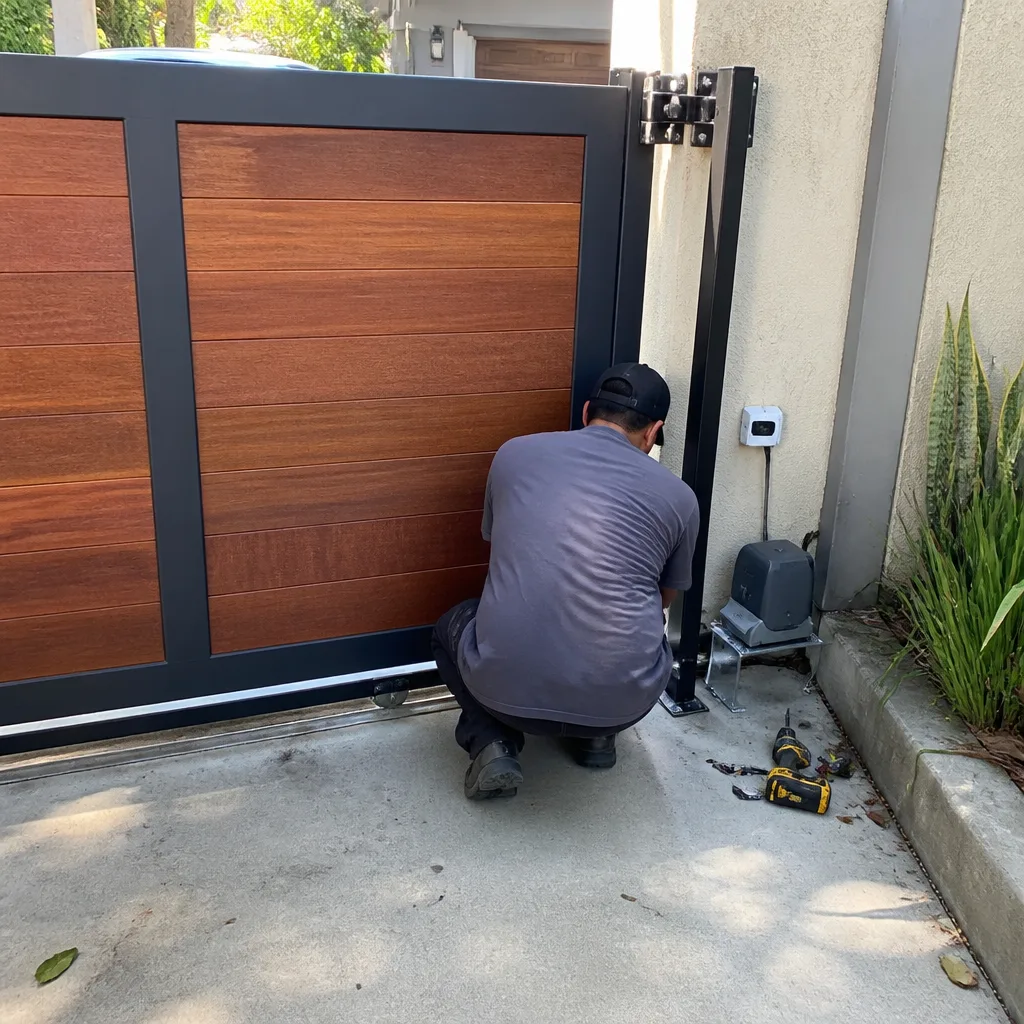
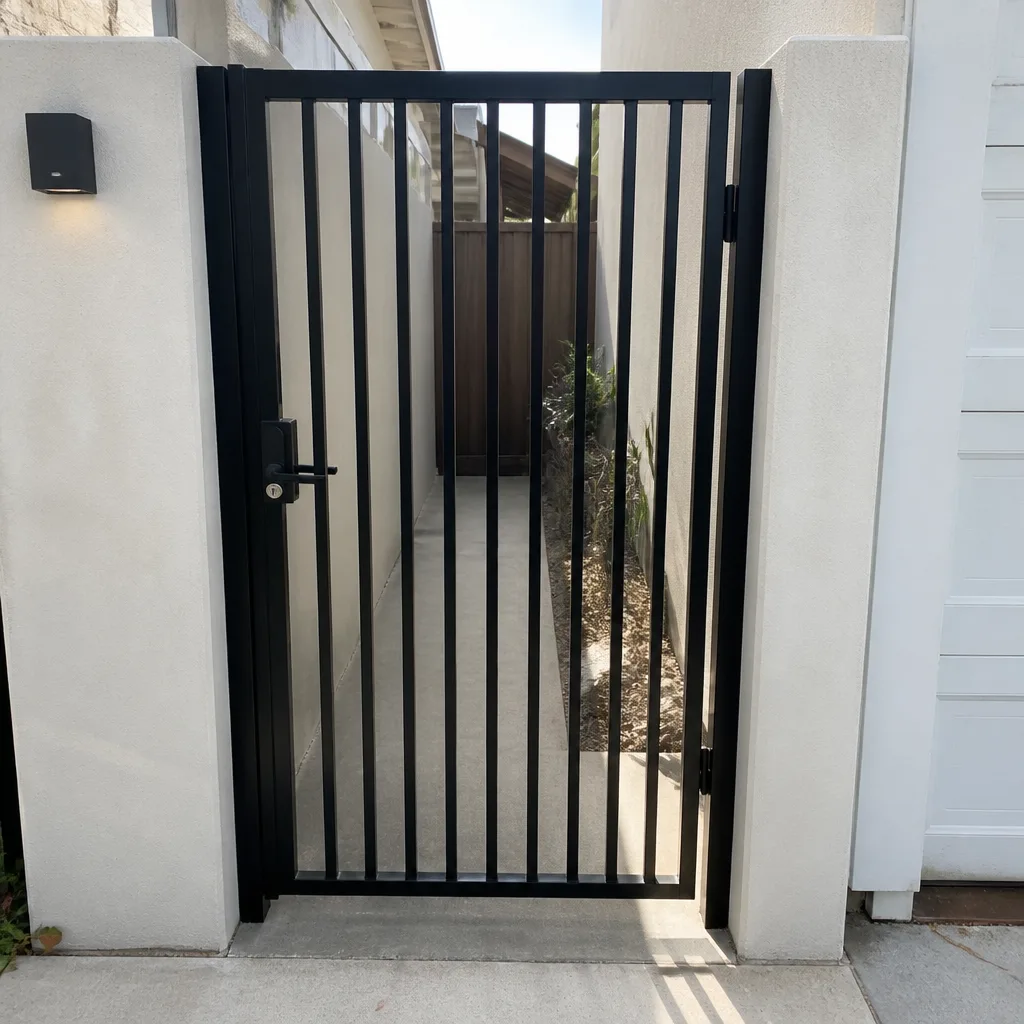 After
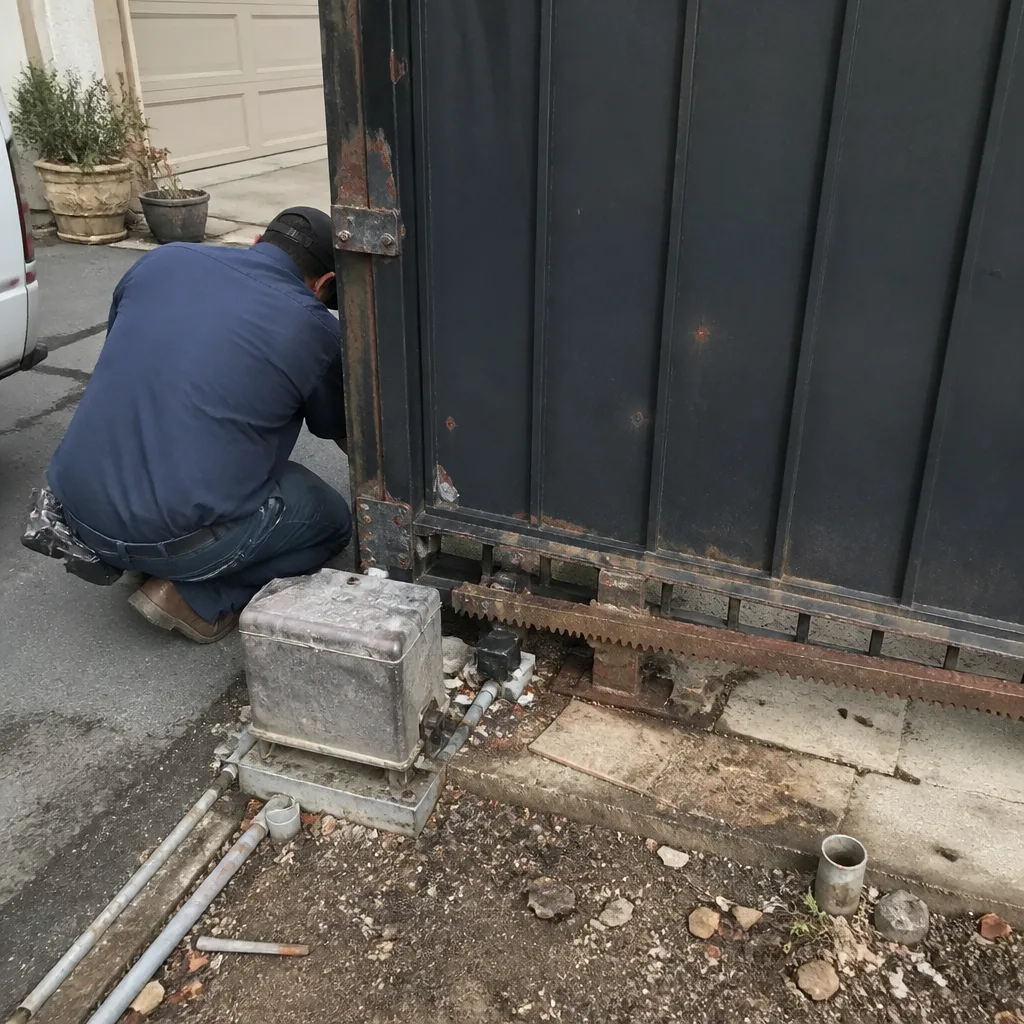 Before
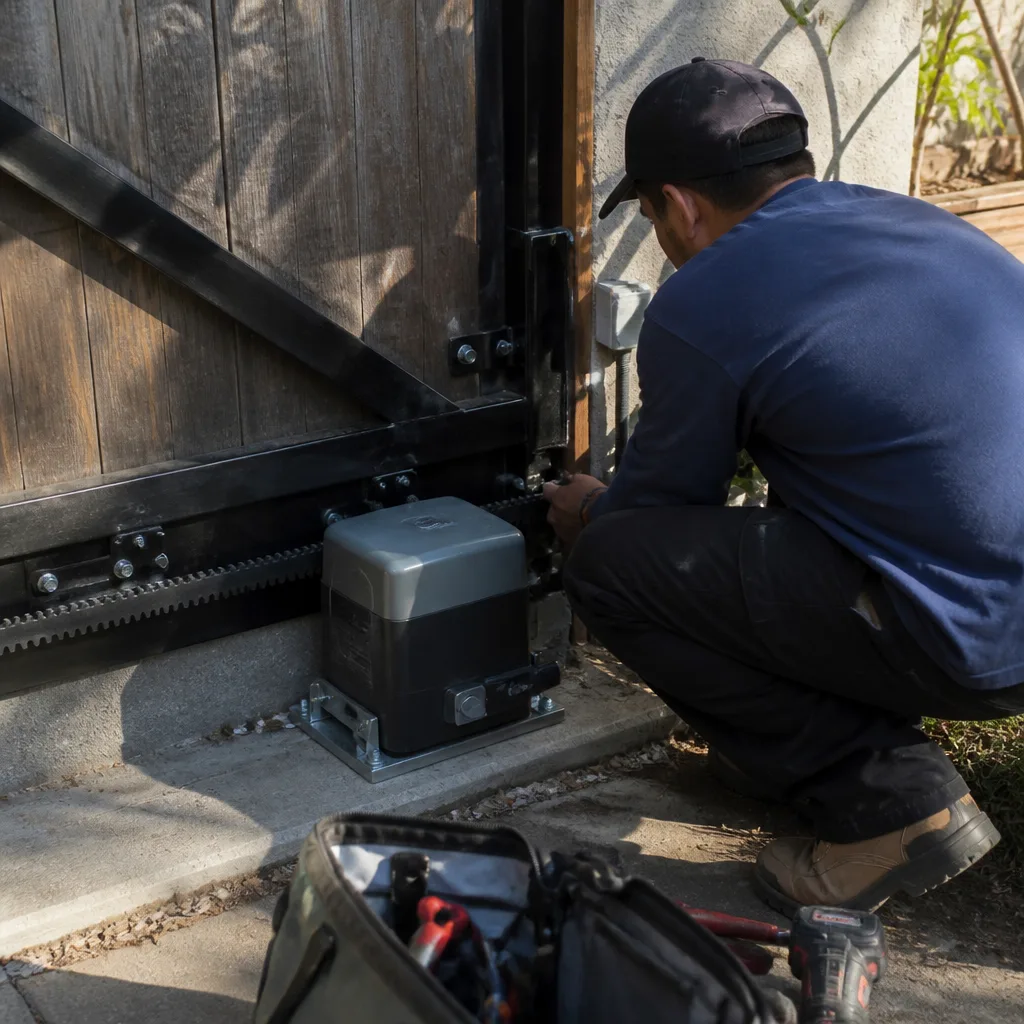 After
 Before
 After